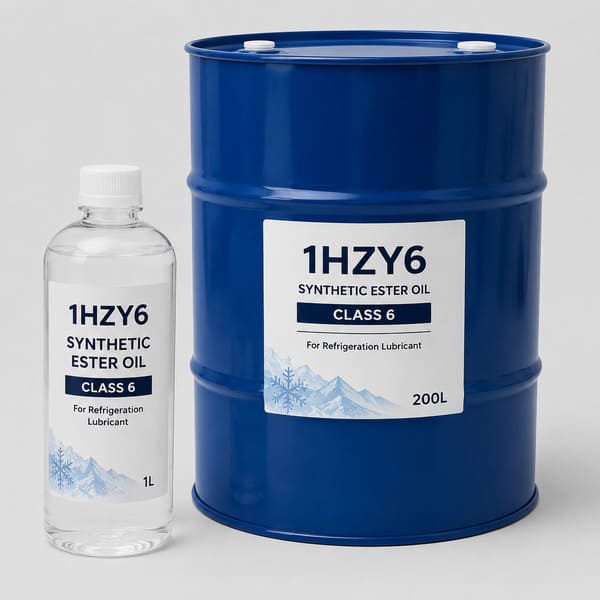
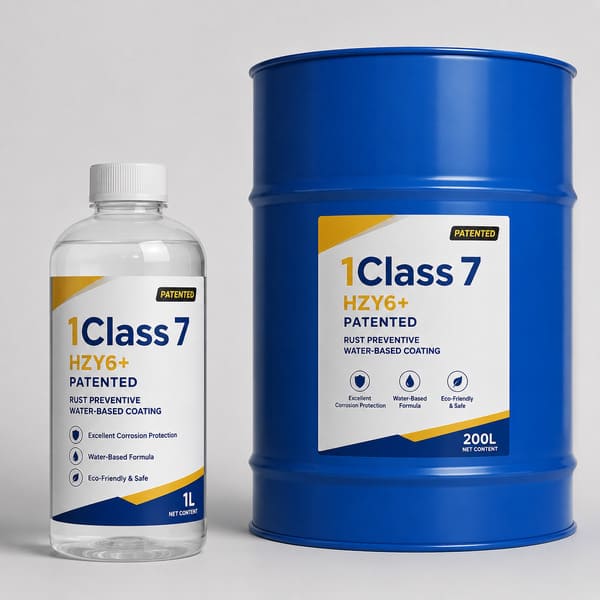
★ ★ Patented · ISO 4925 Class 7 · Top of Range
Sinolook Class 7 Brake Fluid (Patented HZY6+ Formulation)
Sinolook's flagship patented brake fluid formulation. The highest ISO 4925 classification — engineered for motorsport, premium EVs, autonomous-ready braking systems and OEM programs demanding the ultimate in hydraulic performance.
- Dry boiling point 270 °C · Wet boiling point 190 °C
- Certified to FMVSS 116, ISO 4925 Class 7, SAE J1703, GB HZY6+
- Independently tested at ABIC Testing Laboratories (USA)
- Available bulk, drum, IBC and retail packaging — OEM & private label welcome
270 °C
Dry Boiling Point
190 °C
Wet Boiling Point
0.03
Patented Friction Coef.
25 yrs
Manufacturing Experience
Product Overview
Class 7 Brake Fluid (Patented HZY6+ Formulation)
Class 7 is Sinolook's flagship product — a patented high-performance brake fluid that exceeds every commercial specification currently available. With a typical dry ERBP of 270 °C, wet ERBP of 190 °C, and ultra-low 680 mm²/s viscosity at −40 °C, it delivers race-grade thermal performance with EV-grade hydraulic responsiveness.
The patented Sinolook Class 7 formulation also features a uniquely low friction coefficient of 0.03 versus 0.12 for conventional brake fluids — reducing brake caliper noise and improving emergency-braking response time by approximately 30%. Independently tested at ABIC Testing Laboratories, Inc., and certified to ISO 4925:2020 Class 7, FMVSS 116, SAE J1703 and GB 12981 HZY6+.
🏁
Highest commercial spec available
Dry ERBP of 270 °C and wet ERBP of 190 °C — meeting or exceeding every premium racing brake fluid specification. Designed for sustained extreme braking duty.
🔬
Patented low-friction formula
Proprietary friction coefficient of 0.03 vs 0.12 for conventional brake fluid — reduces caliper squeal, improves emergency-stop response time by ~30%.
❄️
Race-grade cold flow
Just 680 mm²/s at −40 °C — among the lowest values commercially available. Enables instant ABS / ESC / EHB response in any climate.
⚙️
Up to 20% better wear resistance
Patented additive package provides documented reduction in caliper seal wear during long-term service.
Technical Specifications
Sinolook Class 7 — typical production values
Enterprise typical values from current production batches. Every shipment is supplied with a Certificate of Analysis (COA) listing the batch-specific results. Independent ABIC test reports against FMVSS 116, ISO 4925, and SAE J1703 are available on request.
| Property | Test method | Typical value | ISO 4925 Class 7 min. |
|---|---|---|---|
| Appearance & Chemistry | |||
| Appearance | Visual | Clear, transparent | Free of suspended matter |
| pH value | ISO 4925 §6.3 | 7.9 | 7.0 – 11.5 |
| Boiling Point | |||
| Equilibrium reflux boiling point (Dry ERBP) | ISO 4925 §6.2 | 270 °C | ≥ 260 |
| Wet equilibrium reflux boiling point (Wet ERBP) | ISO 4925 §6.2.6 | 190 °C | ≥ 180 |
| Kinematic Viscosity | |||
| Viscosity at −40 °C | ISO 4925 §6.1 | 680 mm²/s | ≤ 750 |
| Viscosity at 100 °C | ISO 4925 §6.1 | 2.0 mm²/s | ≥ 1.5 |
| Corrosion (120 h @ 100 °C ± 2 °C, mg/cm²) | |||
| Tinned iron / Steel / Cast iron | ISO 4925 §6.5 | Within tolerance | ±0.2 |
| Aluminium | ISO 4925 §6.5 | Within tolerance | ±0.1 |
| Brass / Copper / Zinc | ISO 4925 §6.5 | Within tolerance | ±0.4 |
| Rubber Compatibility (120 °C, 70 h) | |||
| SBR — hardness change (IRHD) | ISO 4925 §6.10 | Within tolerance | ≤ −15 |
| SBR — volume increase | ISO 4925 §6.10 | Within tolerance | 1 – 16% |
| EPDM — hardness change (IRHD) | ISO 4925 §6.10 | Within tolerance | ≤ −15 |
| EPDM — volume increase | ISO 4925 §6.10 | Within tolerance | 0 – 10% |
Typical values from production batch. Highlighted figures indicate margin above the ISO 4925 Class 7 minimum requirement. Complete test reports — including fluidity, water tolerance, oxidation and stroking — issued per shipment by ABIC Testing Laboratories.
Recommended Applications
Where Sinolook Class 7 brake fluid is used
Class 7 is positioned for specific application profiles where its combination of boiling points, viscosity and chemistry delivers measurable advantages over standard grades.
🏁
Motorsport & track day
Race cars and track-day vehicles facing extreme repeated braking — the patented formula resists vapor lock at sustained caliper temperatures.
⚡
Premium electric vehicles
Flagship EVs with brake-by-wire systems and high-frequency ABS modulation — Class 7's low viscosity matches the demands of fully electronic brake control.
🤖
Autonomous & ADAS-ready vehicles
Self-driving and high-level ADAS systems require millisecond-precise hydraulic actuation — the lowest-viscosity glycol-ether grade enables that response.
🏎️
Hypercars & supercars
OEM programs requiring the ultimate combination of thermal performance, low pedal feel degradation, and consistent friction coefficient.
🚌
Heavy commercial & bus fleet
Long-haul commercial vehicles where extended service interval and consistent performance under all conditions justify the premium grade.
🔧
Premium aftermarket
Performance shops and high-end service centers offering Class 7 as the ultimate brake fluid upgrade for discerning customers.
Note: Always check the brake fluid reservoir cap on the master cylinder for the manufacturer's specification. Never use a fluid grade lower than specified. Glycol-ether brake fluids must never be mixed with DOT 5 silicone.
B2B Capability
Flexible packaging, OEM & global supply
Sinolook Class 7 is supplied in every commercial format — from 250 ml retail bottles for the aftermarket through to ISO tanks for high-volume lubricant blenders and OEM brake-system suppliers.
SERVICE 01
OEM & private label
Custom label design, custom bottle / drum colors, dedicated SKU codes. Artwork approval to first shipment in 25 – 35 days.
SERVICE 02
Retail & bulk packaging
250 ml · 500 ml · 1 L retail bottles · 5 L, 20 L, 200 L drums · 1,000 L IBC totes · flexitank · ISO tank.
SERVICE 03
Global logistics
Direct shipment ex Xiamen, Hong Kong or Singapore. FOB / CIF / DDP terms. UN 1992 / IMDG-compliant export packing.
SERVICE 04
Documentation per shipment
Technical Data Sheet (TDS), Safety Data Sheet (SDS), Certificate of Analysis (COA), AMECA notification, certificate of origin and CIQ documents.
Learn More
Brake fluid resources
In-depth guides on brake fluid chemistry, standards, and selection — written by our technical team.
Reference
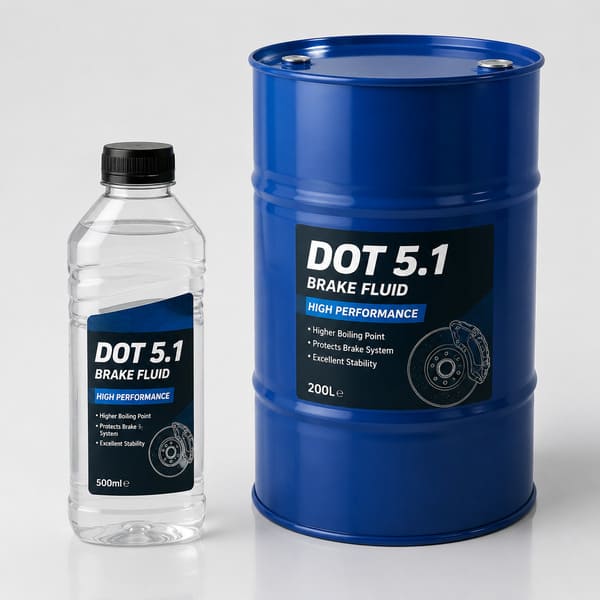
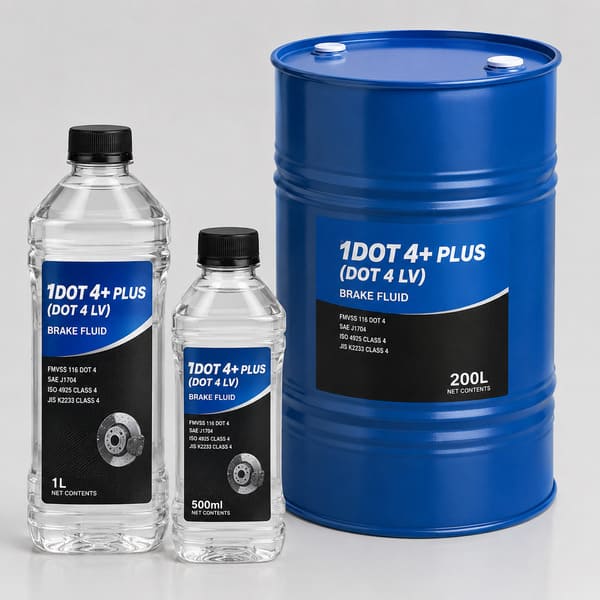
Types of Brake Fluid Explained: DOT 3, 4, 4+, 5, 5.1, HZY6, Class 7
Every brake fluid grade compared — composition, boiling points, applications and selection chart.
Technical
Brake Fluid Boiling Point: Dry vs Wet, Why It Matters
How the ERBP test works, why fluid absorbs moisture, and how brake fade actually happens.
Standards
Brake Fluid Standards: FMVSS 116, ISO 4925, SAE J1703 & GB 12981
A B2B reference on the four major brake fluid standards and how they map to OEM specifications.
Compatibility
Can You Mix Brake Fluids? DOT 3, 4, 5.1 & DOT 5 Compatibility
A complete compatibility matrix — which combinations are safe, which will destroy your brake system.
EV / Hybrid
Brake Fluid for EVs & Hybrids: Why Low-Viscosity Matters
Regenerative braking, brake-by-wire, and why electrified vehicles need low-viscosity high-performance fluid.
Service Interval
How Often Should You Change Brake Fluid?
Manufacturer intervals, climate impact, and when symptom-based replacement makes sense.
FAQ
Frequently asked questions
What is Class 7 brake fluid?
Class 7 is the highest classification in the ISO 4925:2020 brake fluid standard. It requires a dry equilibrium reflux boiling point of at least 260 °C, a wet ERBP of at least 180 °C, and a kinematic viscosity at −40 °C no greater than 680 mm²/s. Sinolook Class 7 brake fluid is a patented formulation that meets all these requirements while adding a uniquely low friction coefficient for improved braking response.
What makes Sinolook Class 7 a patented product?
The Sinolook Class 7 brake fluid uses a proprietary additive package, protected by patent, that achieves a friction coefficient of 0.03 — compared to 0.12 for conventional brake fluid. This translates to approximately 30% faster emergency-braking response, reduced caliper noise, and approximately 20% better wear resistance for brake-system seals and components.
How does Class 7 compare to HZY6?
HZY6 (ISO Class 6) and Class 7 share similar dry and wet boiling points. The key Class 7 advantages are: even lower low-temperature viscosity (680 vs 700 mm²/s at −40 °C), the patented low-friction formulation (0.03 vs conventional 0.12), and documented wear-resistance improvements. Class 7 is positioned as the top tier of the Sinolook brake fluid range.
Is Class 7 suitable for racing applications?
Yes. Class 7's dry ERBP of 270 °C and wet ERBP of 190 °C meet or exceed every commercial racing brake fluid specification. The patented low-friction formula provides consistent pedal feel under repeated thermal cycling — critical for track-day and motorsport applications.
Is Sinolook Class 7 compatible with my current DOT brake fluid?
Yes — Class 7 is glycol-ether based and fully miscible with DOT 3, DOT 4, DOT 4 LV, DOT 5.1 and HZY6 brake fluids from any manufacturer meeting FMVSS 116 or ISO 4925. It must never be mixed with DOT 5 silicone brake fluid. Upgrading from any of the compatible grades requires no system flush.
Can I mix Sinolook Class 7 with other glycol-ether brake fluids?
Yes. Sinolook Class 7 is fully compatible with all other glycol-ether based brake fluids — DOT 3, DOT 4, DOT 4+, DOT 4 LV, DOT 5.1, HZY6 and Class 7 — from any manufacturer meeting FMVSS 116 or ISO 4925. It must never be mixed with DOT 5 silicone brake fluid, which is chemically incompatible and will damage seals.
What standards does Sinolook Class 7 meet?
Sinolook Class 7 brake fluid is certified to four major international standards:
• US FMVSS 116
• ISO 4925:2020 — Class 7
• SAE J1703
• GB 12981 HZY6+ — China national standard
Independent test reports are issued by ABIC Testing Laboratories, Inc. in Fairfield, New Jersey, USA. Manufacturing operates under IATF 16949:2016 and ISO 9001:2015 quality systems.
• US FMVSS 116
• ISO 4925:2020 — Class 7
• SAE J1703
• GB 12981 HZY6+ — China national standard
Independent test reports are issued by ABIC Testing Laboratories, Inc. in Fairfield, New Jersey, USA. Manufacturing operates under IATF 16949:2016 and ISO 9001:2015 quality systems.
What is the shelf life of unopened Class 7?
Sealed Sinolook Class 7 has a shelf life of 24 months from the production date when stored in original containers, away from direct sunlight, at 5 – 30 °C. Once opened, glycol-ether brake fluid begins absorbing atmospheric moisture (hygroscopy), which lowers its boiling point — opened containers should be used within 12 months.
What is the minimum order quantity for Sinolook Class 7?
Standard MOQ is 1 × 20'FCL, approximately 18–20 metric tons depending on packaging configuration. Smaller trial orders may be accepted for OEM and private-label customers. Bulk shipment in flexitank or ISO tank is available for orders 20 tons and above.
Does Sinolook offer OEM and private-label Class 7?
Yes. Sinolook offers full OEM and private-label service: custom label design, custom bottle and drum colors, custom packaging sizes from 250 ml to 200 L, and bulk supply. Lead time is typically 25 – 35 days from artwork approval. Contact sales@sinolook.com with your label artwork and packaging requirement.
Source Class 7 from a 25-year manufacturer
Tell us your packaging requirement, annual volume, and destination port. We'll respond within 24 hours with technical specs, pricing, and logistics options.
Request a Quote
📧 sales@sinolook.com
💬 WhatsApp +86 181 5036 2095