How to Choose Lubricant Detergents: Sulfonate vs Phenate vs Salicylate
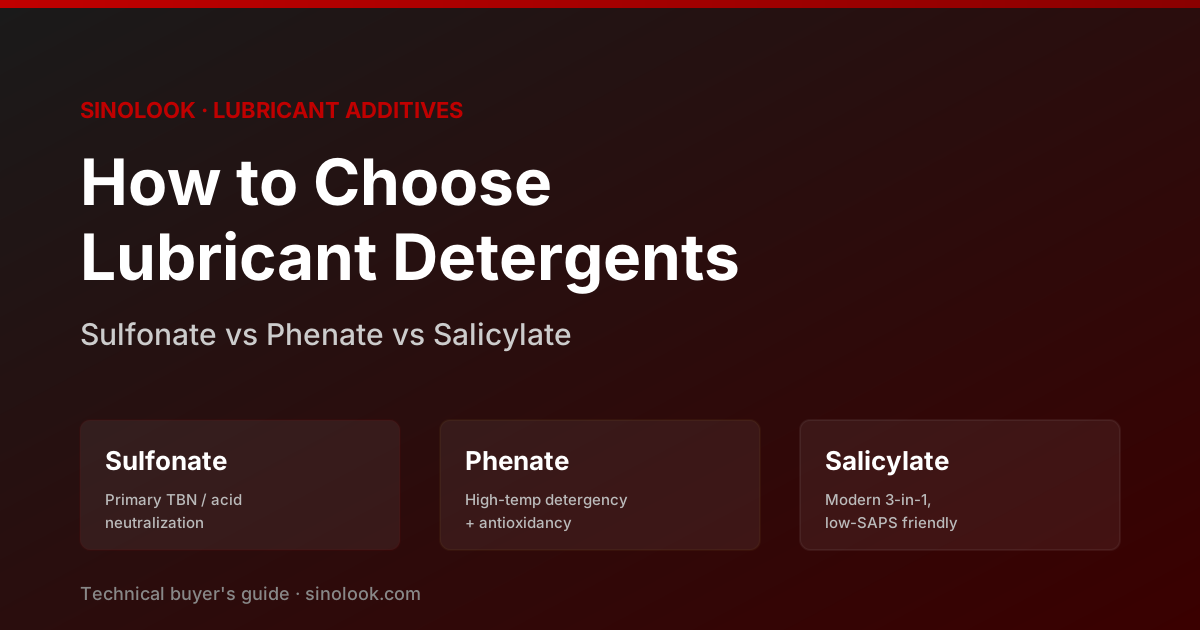
Detergents are among the most important additives in any engine oil — they neutralize acids and keep hot metal surfaces clean. But there are three main detergent chemistries to choose from, and picking the wrong balance can cost you performance or money. This guide explains how sulfonate, phenate and salicylate detergents differ, and how to choose between them.
What a detergent actually does
In a lubricant, a detergent performs two core jobs. First, it neutralizes acids formed by combustion and oil oxidation — acids that would otherwise corrode metal and thicken the oil. The capacity to do this is measured as Total Base Number (TBN), the alkaline reserve the detergent carries. Second, a detergent keeps high-temperature surfaces — pistons, ring grooves — clean, preventing the lacquer and deposits that form where oil bakes onto hot metal.
Detergents are metal-based (calcium, magnesium, occasionally barium), and that metal is what carries the base reserve. This is also why detergents contribute to sulphated ash, one of the properties modern low-SAPS engine oils must limit. The art of formulating is getting the cleanliness and acid neutralization you need within the ash budget — and that starts with choosing the right detergent chemistry.
The three detergent chemistries
Almost all lubricant detergents fall into three families. Each has a distinct strength.
1. Sulfonate detergents — the TBN workhorse
Sulfonate detergents are the most widely used and most cost-effective source of TBN. Made by neutralizing sulfonic acids with calcium or magnesium, they are the primary way formulators build base reserve. They come in three levels: low-TBN (essentially neutral, for rust protection and balance), medium-TBN, and high-TBN (overbased) grades that pack the most alkaline reserve per kilogram. If you need acid neutralization economically, sulfonate is almost always the starting point.
2. Phenate detergents — high-temperature cleanliness
Sulfurized alkylphenate detergents bring something sulfonate does not: outstanding high-temperature detergency and a useful antioxidant contribution from the sulphur bridges in their structure. They keep pistons clean under thermal stress and help the oil resist oxidation. Phenates also come in low, medium and high-TBN grades, but they are chosen less for raw TBN and more for that high-temperature cleaning power and built-in antioxidancy.
3. Salicylate detergents — the modern multifunctional choice
Calcium salicylate detergents are the newest of the three and increasingly popular. Their distinction is that a single molecule delivers detergency, antioxidancy and thermal stability all at once, with clean, ashless-friendly behaviour. This multifunctional, low-deposit character makes salicylates an excellent fit for modern low-SAPS and fuel-economy oils — which is why their use has grown steadily.
Side-by-side comparison
Here is how the three detergent chemistries compare on the properties that matter most when choosing:
| Property | Sulfonate | Phenate | Salicylate |
|---|---|---|---|
| Primary strength | TBN / acid neutralization | High-temp detergency | Multifunctional 3-in-1 |
| TBN economy | Best (most cost-effective) | Moderate | Good |
| High-temp detergency | Moderate | Excellent | Very good |
| Antioxidancy | Low | Useful (sulphur) | Good (built-in) |
| Thermal stability | Good | Good | Excellent |
| Low-SAPS fit | Good | Good | Excellent (clean) |
| Typical role | Primary TBN source | Cleanliness + AO boost | Efficient all-rounder |
Key insight: these are not competitors so much as teammates. The overwhelming majority of quality engine oils use a combination — typically high-TBN sulfonate for base reserve, phenate or salicylate for high-temperature cleanliness and antioxidancy. The question is rarely "which one" but "which blend, and in what ratio."
How to choose (by application)
The right detergent system depends on what the finished oil has to do.
Passenger car engine oils (PCMO)
Modern low-SAPS PCMO favours clean, efficient chemistry. A common approach is medium-TBN sulfonate for base reserve plus salicylate (or phenate) for high-temperature cleanliness and antioxidancy, all balanced against the ash, phosphorus and sulphur limits of specifications like API SP and ILSAC GF-6. See our engine oil additives guide.
Heavy-duty diesel engine oils
Diesel service produces more combustion acid and soot, so it demands more TBN. High-TBN sulfonate carries the base reserve, paired with high-temperature phenate (and increasingly salicylate) for piston cleanliness. This pairs with strong dispersants for soot control — see diesel engine oil additives.
Marine and large-engine oils
Marine engines burning high-sulphur fuel need very high TBN to neutralize sulphuric acid. High-TBN sulfonate and high-TBN phenate dominate here, sometimes with magnesium grades. See industrial & marine additives.
Understanding TBN and base reserve
Because TBN drives so much of the detergent choice, it is worth understanding. TBN (measured by ASTM D2896) tells you how much acid the oil can neutralize before its protection runs out. Higher TBN means a longer acid-fighting life — important for long drains and high-sulphur fuels.
But more TBN is not always better: the metal that carries it also adds sulphated ash, which modern emission-system-friendly oils must limit. This tension — enough base reserve, but not too much ash — is exactly why overbased (high-TBN) sulfonate, which packs maximum reserve per unit of additive, is so valuable, and why clean salicylate chemistry has gained ground. For the underlying base oil side of formulation, see our base oil range.
Need help choosing a detergent system?
Sinolook supplies the full range of sulfonate, phenate and salicylate detergents — and the complete additive system around them — to over 60 countries. Tell us your specification and our technical team will help you select and balance the right system.
Request technical support & a quoteFrequently asked questions
What is the difference between sulfonate, phenate and salicylate detergents?
Sulfonate detergents are the primary, cost-effective source of TBN (base reserve) for neutralizing acids. Phenate detergents add high-temperature detergency and built-in antioxidancy from their sulphur structure. Salicylate detergents are a modern, multifunctional chemistry that combines detergency, antioxidancy and thermal stability in one clean, low-SAPS-friendly molecule. Most quality engine oils use a combination rather than just one.
Which detergent gives the most TBN?
Sulfonate detergents are the workhorse for TBN — high-TBN (overbased) calcium sulfonate is the most economical way to build base reserve, available up to around 300–400 mg KOH/g. High-TBN phenate and salicylate grades also provide strong base reserve, but sulfonate is usually the primary, most cost-effective TBN source in a balanced detergent system.
Are salicylate detergents better than sulfonate or phenate?
Not strictly better — different. Salicylate offers detergency, antioxidancy and thermal stability in one clean molecule, which suits modern low-SAPS and fuel-economy oils especially well. But sulfonate remains the most economical TBN source and phenate offers specific high-temperature detergency. The best choice is usually a balanced combination tuned to the specification, not a single chemistry.
What detergents do diesel engine oils use?
Heavy-duty diesel oils typically use high-TBN sulfonate as the primary base reserve to neutralize combustion acids, combined with high-temperature phenate (and increasingly salicylate) for piston cleanliness and oxidation control. The high soot and acid load of diesel service demands strong, high-TBN detergency, paired with robust dispersants for soot control.
Can Sinolook supply a complete detergent package?
Sinolook supplies the full range of detergent chemistries — low, medium and high-TBN calcium sulfonate, magnesium and barium sulfonate, sulfurized alkylphenate and calcium salicylate — plus dispersants, antioxidants and the other components of a complete additive system, to over 60 countries. Our technical team can help you select and balance the right detergent system for your specification. Contact sales@sinolook.com for TDS and quotations.