2,6-Di-tert-butyl-p-cresol (DBPC)
2,6-Di-tert-butyl-p-cresol (DBPC, also known as BHT) — the classic hindered phenolic antioxidant. An ashless primary antioxidant protecting oils and fuels from oxidation.
The classic hindered phenolic antioxidant
DBPC — also known as BHT — is the classic hindered phenolic antioxidant, an ashless additive that protects oils and fuels by interrupting the oxidation chain reaction.
2,6-Di-tert-butyl-p-cresol (DBPC), also widely known as BHT, is the classic hindered phenolic antioxidant. As an ashless primary (radical-scavenging) antioxidant, it interrupts the oxidation chain reaction by donating hydrogen to peroxy radicals, protecting the oil from thickening, acid formation and deposit build-up. Being ashless, it adds no sulphated ash, making it valuable in modern low-SAPS oils, turbine oils, fuels and a wide range of industrial lubricants. It is often combined with aminic antioxidants for broad-temperature protection, and is part of the antioxidant & anticorrosion range.
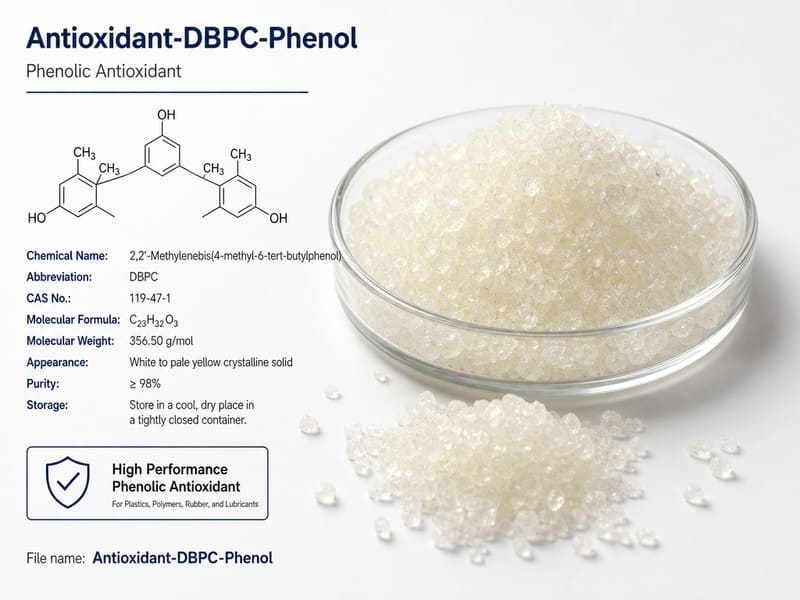
2,6-Di-tert-butyl-p-cresol (DBPC) — typical properties
Representative typical values for DBPC (2,6-di-tert-butyl-p-cresol). Indicative only — exact values vary by grade and are confirmed on the TDS and batch COA.
| Property | Typical Value | Method / Note |
|---|---|---|
| Appearance | White crystalline solid | Visual |
| Assay (purity) | ~99 wt% min | Typical |
| Melting point | ~69–71 °C | Typical |
| Form | Crystals / flakes / granules | Grade-dependent |
| Ash | Ashless | No metal |
| Type | Primary (radical scavenger) | Hindered phenol |
| Synonym | BHT | Butylated hydroxytoluene |
Typical values for guidance only — not a specification. Request the TDS for the specific grade you need; the COA reports actual measured values for your batch.
Where DBPC phenolic antioxidant is used
Industrial Oils
Ashless oxidation protection for hydraulic, turbine and circulating oils. See industrial & marine.
Turbine Oils
Long-life oxidation protection for ultra-long-drain turbine oils.
Fuels
Oxidation stability additive for fuels and intermediates.
Engine Oils
Ashless antioxidant support, often with aminic types. See engine oil additives.
Why formulators choose DBPC phenolic antioxidant
Classic proven antioxidant
The well-established hindered phenolic, effective and widely used across oils and fuels.
Ashless, low-SAPS friendly
Adds no sulphated ash — ideal for modern low-SAPS and turbine oils.
Pairs with aminic antioxidants
Combines with aminic types for broad-temperature oxidation protection.
From sample drum to ISO tank
Sinolook supplies DBPC phenolic antioxidant at any scale, from formulation samples to commercial bulk, to over 60 countries.
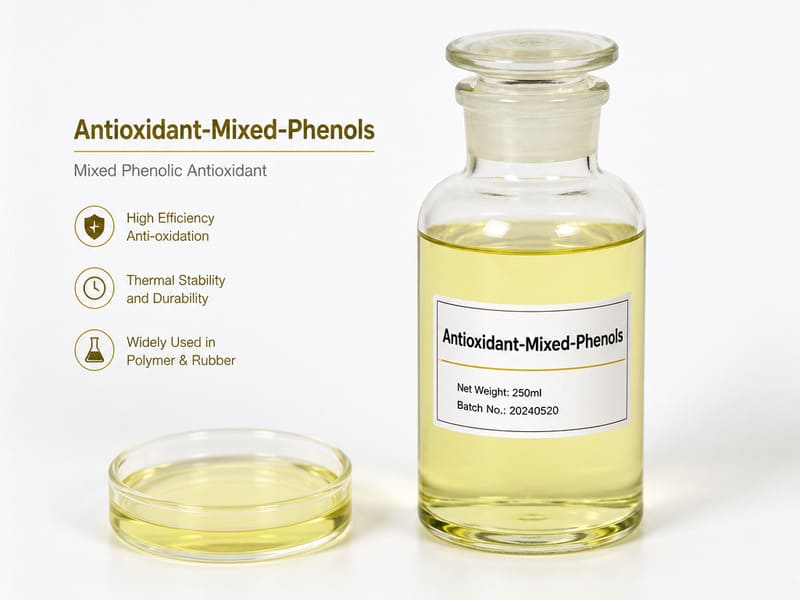
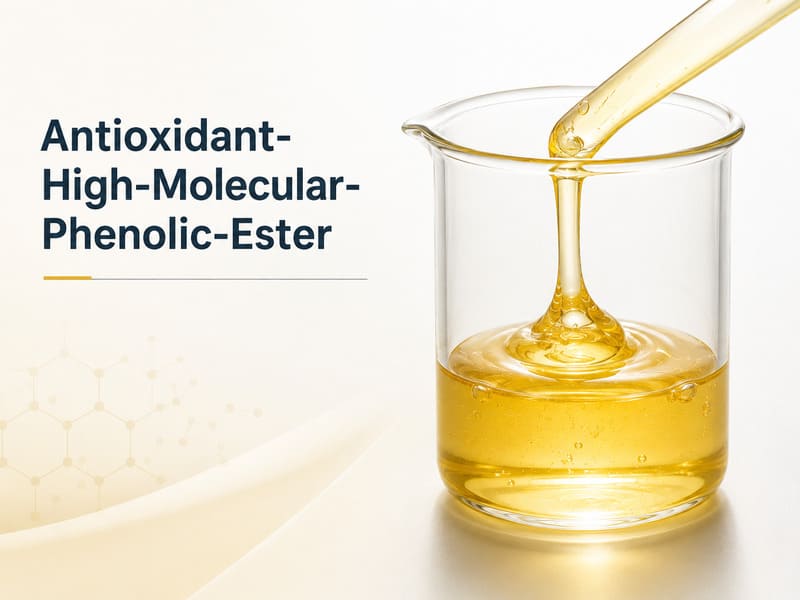
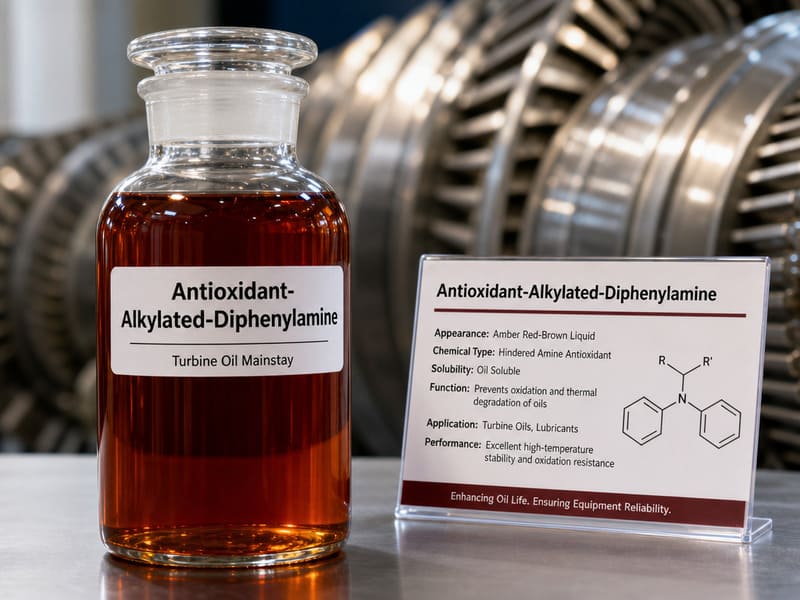
Other antioxidant & anticorrosion additives
Explore the rest of the antioxidant & anticorrosion additive range:
Frequently asked questions
What is DBPC (BHT) used for?
What is the difference between phenolic and aminic antioxidants?
Is DBPC the same as BHT?
Why use an ashless phenolic antioxidant?
Can Sinolook provide TDS, MSDS and COA?
Request DBPC phenolic antioxidant from Sinolook
Tell us your target grade, application and volume — we'll send the TDS, a batch COA and a delivered quotation within 24 hours.
Request a Quote