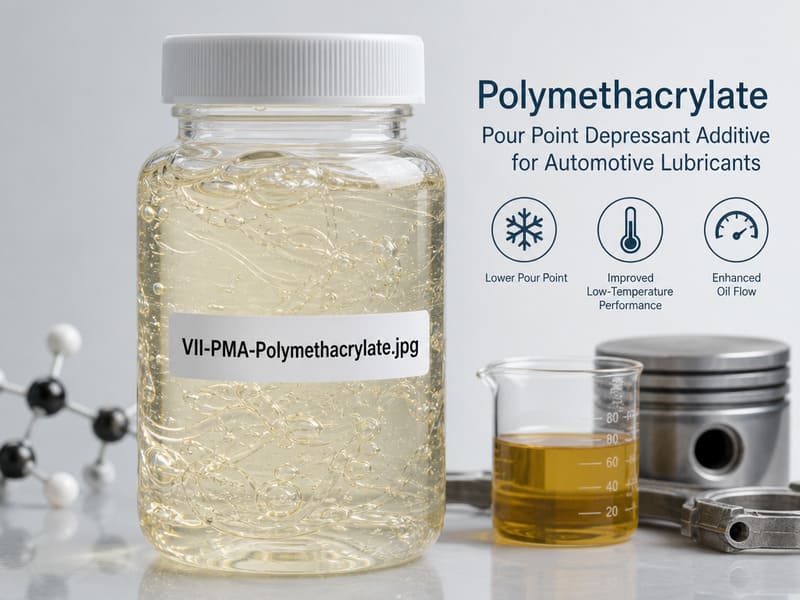
Polymethacrylate (PMA)
Comb polymer · dual VII + PPD · Per TDS
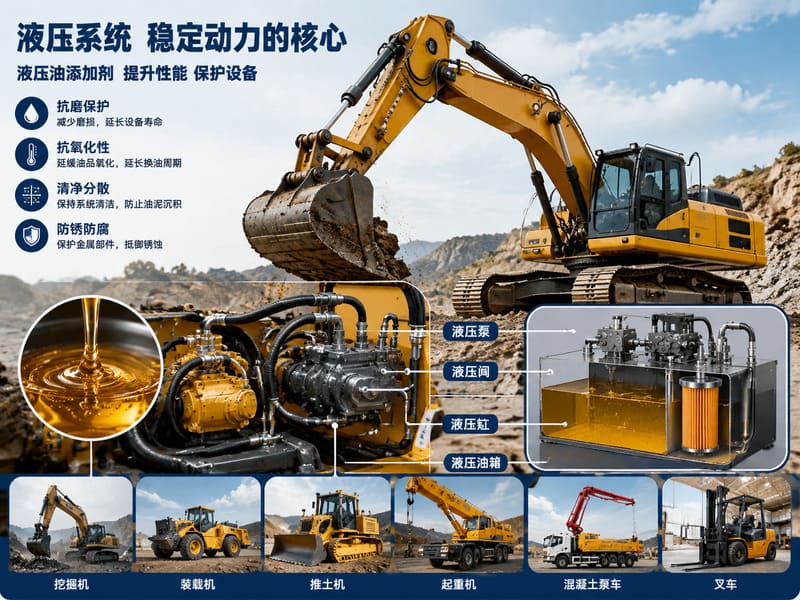
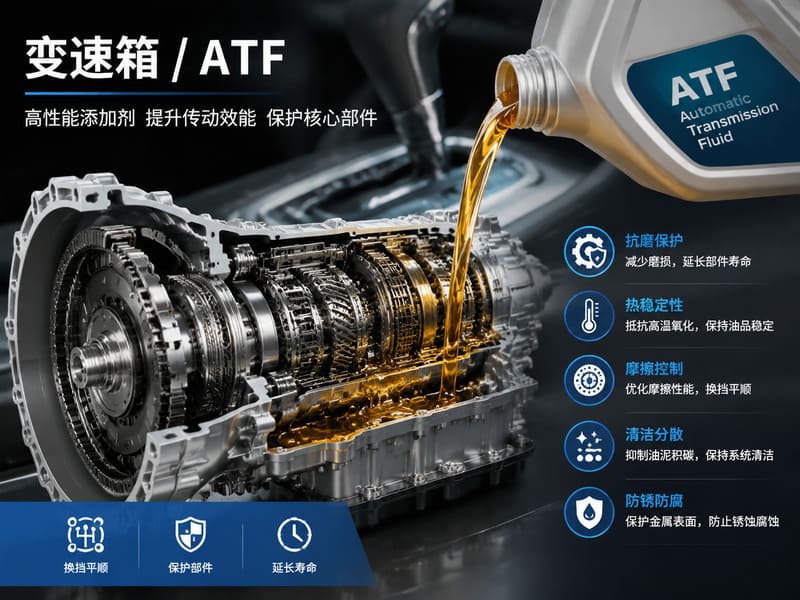
Best low-temperature performance, and uniquely doubles as a pour point depressant. The premium choice for multigrade HVI hydraulic oils, ATF and Arctic-grade lubricants.
View detailsPolymethacrylate (PMA), olefin copolymer (OCP) and hydrogenated styrene-diene copolymer (HSD) viscosity modifiers — three chemistries covering thickening efficiency, low-temperature performance and shear stability for multigrade engine oils, ATF, gear oils and HVI hydraulic fluids.
Without a viscosity index improver, a single oil cannot be both thin enough for a cold winter start and thick enough to protect a hot running engine. The VII is what turns a single-grade base oil into a 5W-30 or 15W-40 multigrade.
A viscosity index improver (VII), also called a viscosity modifier (VM), is a polymer that dissolves in the base oil and changes shape with temperature. When cold, the polymer coils contract and contribute little viscosity, so the oil stays fluid for easy cold starts; when hot, the coils expand and thicken the oil, compensating for the base oil's natural thinning. Sinolook supplies all three major VII chemistries — PMA (best low-temperature + pour point depression), OCP (most cost-effective workhorse), and HSD (best shear stability) — so you can match the exact viscosity, low-temperature and durability targets of your finished lubricant.
The VII polymer changes shape with temperature. This temperature-dependent coil expansion is the entire reason multigrade oils exist — it flattens the viscosity-temperature curve so the oil behaves correctly at both extremes.
The flatter the viscosity-temperature curve, the higher the Viscosity Index (VI) — and the wider the multigrade span the oil can achieve (e.g. 5W-40 vs 20W-40). VIIs are what make wide-span fuel-economy grades like 0W-20 and 5W-30 possible.
No single VII is best at everything. OCP wins on cost and thickening efficiency, PMA wins on low-temperature performance (plus pour point depression), and HSD wins on shear stability. Choose by what your finished oil specification prioritizes.
Bonus: PMA uniquely doubles as a pour point depressant thanks to its comb-like side chains — see pour point depressants →. Many formulations blend two VII types to balance cost and performance.
From cost-effective OCP for mainstream engine oils to shear-stable HSD for long-drain HDDO and low-temperature PMA for hydraulic and ATF — click any product for full TDS and bulk-supply quotation.
Comb polymer · dual VII + PPD · Per TDS
Best low-temperature performance, and uniquely doubles as a pour point depressant. The premium choice for multigrade HVI hydraulic oils, ATF and Arctic-grade lubricants.
View detailsEthylene-propylene · Per TDS
The most widely used and most cost-effective viscosity modifier — good thickening efficiency, the mainstream workhorse for passenger car and heavy-duty multigrade engine oils.
View detailsStar/linear copolymer · low SSI · Per TDS
Best shear stability of the three — retains viscosity under high mechanical stress. The choice for long-drain heavy-duty diesel and high-performance multigrade engine oils.
View detailsQuick comparison across all three Sinolook viscosity modifier products. Click any row to open the full TDS.
| Product | Chemistry | Typical Treat Rate | Primary Application | Key Strength | TDS |
|---|---|---|---|---|---|
| Polymethacrylate (PMA) ★ | Comb polymer | 3–12% | HVI hydraulic, ATF, Arctic oils | Low-temp + pour point depression | View → |
| Olefin Copolymer (OCP) | Ethylene-propylene | 4–12% | PCMO & HDDO multigrade engine oil | Cost-effective workhorse | View → |
| Hydrogenated Styrene-Diene (HSD) ★ | Star/linear copolymer | 4–10% | Long-drain HDDO, high-performance PCMO | Best shear stability (low SSI) | View → |
Treat rates indicative for typical formulations on an as-supplied basis. Refer to product TDS, your viscosity targets (SAE J300) and the maximum SSI allowed by your specification.
The right VII depends on whether the finished lubricant prioritizes cost, low-temperature flow, or shear stability under sustained mechanical stress.
VII performance depends entirely on molecular-weight consistency — the difference between hitting your viscosity target on the first blend or reformulating. Every Sinolook VII batch is verified for thickening efficiency and shear stability.
PMA, OCP and HSD under one PO — match cost, low-temperature and shear-stability targets without qualifying separate suppliers for each polymer type.
Molecular-weight and shear-stability index verified per batch — predictable thickening response means fewer reformulations and stable viscosity grade in production.
Our PMA grades deliver viscosity index improvement plus pour point depression in one additive — simplifying low-temperature multigrade hydraulic and ATF formulations.
Start with a 200L drum for formulation qualification, scale to IBC tote, flexitank or ISO tank for commercial supply across 60+ countries.
Multigrade oils combine viscosity modifiers with pour point depressants for cold-flow performance, and dispersant-type VIIs overlap with the dispersant function. Sinolook supplies the full bench:

PMA-based and other PPDs that disrupt wax crystallization for low-temperature flow. The natural cold-flow partner to viscosity modifiers.

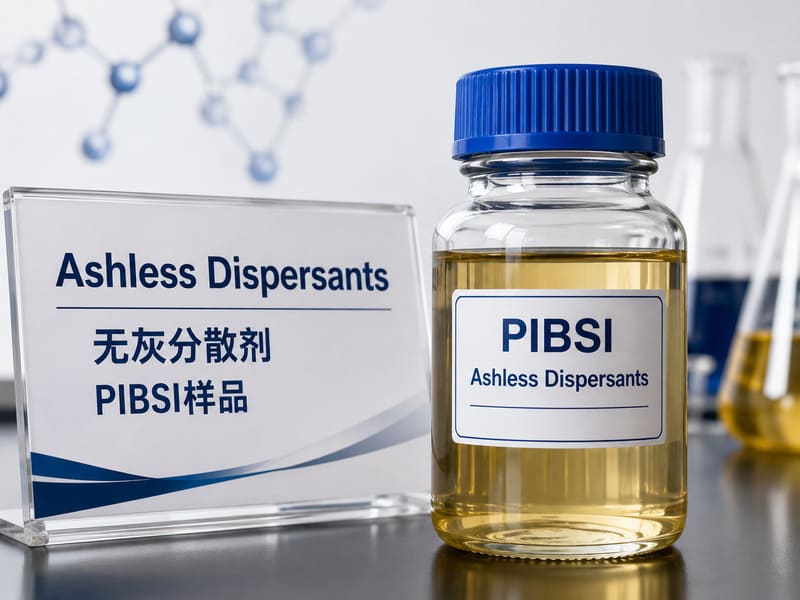
7 PIBSI grades. Dispersant-type VIIs combine viscosity modification with the sludge-suspending function of these dispersants.
Tell us the polymer type (PMA, OCP, HSD), target viscosity grade and SSI requirement — we'll respond within 24 hours with TDS, reference treat rate and a delivered quotation.
Request a Quote