Xiamen Sinolook Oil Co., Ltd

Ashless Dispersant Additive — PIBSI & PIB Succinimide Supplier | Sinolook

★ 7 PIBSI Grades · Mono · Bis · Poly · Borated · Low-Viscosity
The metal-free polymer that keeps soot and sludge in the oil, not on the engine.

Mono, Bis and Poly succinimide plus borated, boron-phosphated and low-viscosity PIBSI — seven dispersant grades engineered for passenger car motor oil, heavy-duty diesel, ATF and gear oil formulations meeting API SP, CK-4, ACEA C-class and Dexron specifications.

7
PIBSI Grades
Ashless
Metal-Free Polymer
3–8%
Typical Treat Rate
60+
Countries Served
About Ashless Dispersants

Why every modern engine oil needs an ashless dispersant

Combustion always produces some unburned carbon and oxidation by-products that drop into the crankcase. Without a dispersant, those particles agglomerate into sludge that coats valve covers, blocks oil galleries and eventually leads to engine failure.

Ashless dispersants — almost always polyisobutylene succinimide (PIBSI) — solve this. A long, oil-soluble polyisobutylene tail keeps the molecule dispersed in the bulk oil; a polar succinimide head latches onto soot, sludge precursors and oxidation products and holds them in suspension. Because PIBSI is metal-free (no calcium, magnesium, or zinc), it contributes zero sulphated ash — critical for low-SAPS formulations. Sinolook supplies seven PIBSI variants across three dispersancy levels (Mono / Bis / Poly) plus four modified grades (Borated, Boron-Phosphated, Low-Viscosity) — one dispersant family for every modern lubricant target.
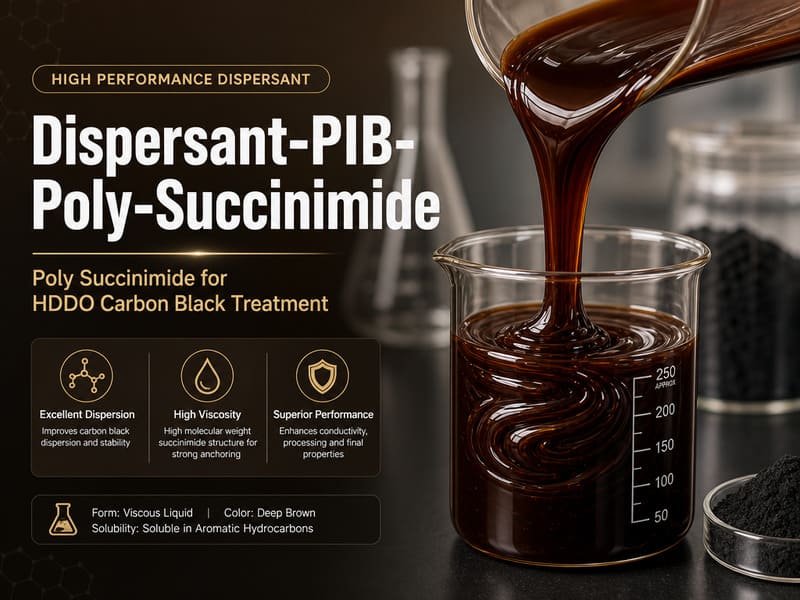
PIB poly-succinimide ashless dispersant additive sample
Dispersant vs Detergent

Two cleaners, two zones — and why you need both

Many people use "dispersant" and "detergent" interchangeably, but they're complementary additives that work in completely different parts of the engine. Detergents clean the hot zone above the rings; dispersants suspend cold contaminants in the sump.

Inside the engine: detergent and dispersant work in different zones Temperature drops from 250°C+ at piston crown to 80–120°C in the sump HOT ZONE Piston crown, rings, ring grooves 200–300°C piston + rings ✗ Acid attack (SOₓ, NOₓ) ✗ High-temp carbon COLD ZONE Sump, crankcase, oil pan, rocker cover 80–120°C oil sump (soot + sludge) ↑ DETERGENT Metal-containing (Ca, Mg, Ba sulfonate / phenate / salicylate) ✓ Neutralizes hot-zone acids ✓ Cleans pistons & ring grooves ✓ TBN reserve for acid load Treat rate: 2–8% · contributes sulphated ash ↓ ASHLESS DISPERSANT Metal-free polymer (PIBSI succinimide) ✓ Suspends cold sludge & soot ✓ Prevents valve-cover varnish ✓ Handles EGR soot in HDDO Treat rate: 3–8% · zero sulphated ash

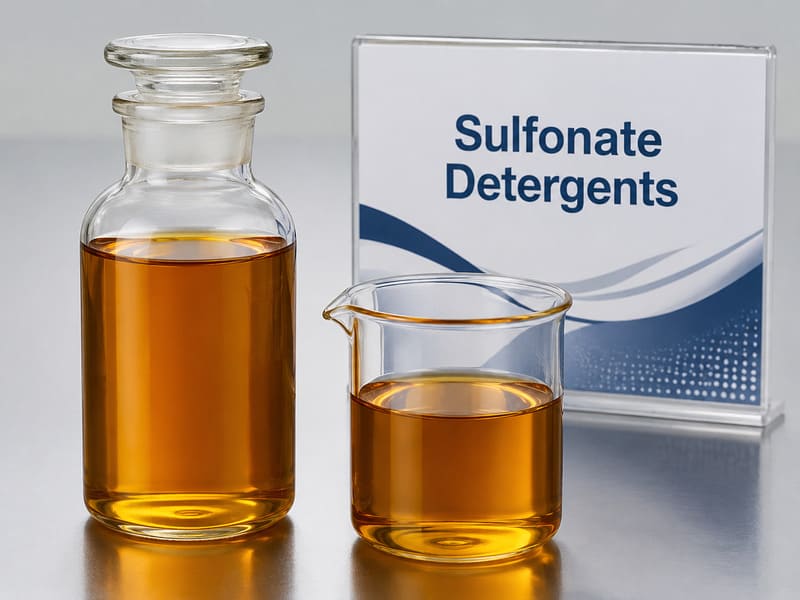
Modern engine oils combine both: detergent for the hot zone, dispersant for the cold zone. See our sulfonate, phenate and salicylate detergent lines.

PIBSI Structure Evolution

Mono → Bis → Poly: more heads = more dispersancy capacity

All PIBSI dispersants share the same building blocks — a long polyisobutylene (PIB) tail that solubilizes in oil, and one or more succinimide heads that grab onto polar contaminants. The number of heads per molecule defines its dispersancy capacity and target application.

PIB succinimide molecular structures Polyisobutylene tail (oil-soluble) + succinimide head(s) (grabs polar contaminants) Mono-Succinimide PIB tail N-R 1 head Best for: PCMO general sludge control Lowest cost · simplest variant Bis-Succinimide N-R PIB tail N-R 2 heads Best for: PCMO + light-duty diesel All-around workhorse · gear oils ★ Poly-Succinimide N-R N-R PIB tail N-R N-R 3+ heads Best for: HDDO high soot load (EGR) Maximum dispersancy capacity

Beyond Mono / Bis / Poly, Sinolook also supplies borated and boron-phosphated modifications for seal compatibility and ATF performance, plus a low-viscosity dispersant designed for modern fuel-economy 0W-16 / 0W-20 engine oils. See all 7 grades below.

Our Ashless Dispersant Range

Seven PIBSI grades, every formulation target covered

Three standard PIBSI variants (Mono / Bis / Poly) plus four modified grades (Borated × 2, Boron-Phosphated, Low-Viscosity) — click any product for full TDS and bulk-supply quotation.

01

Standard PIBSI — Mono / Bis / Poly

Three dispersancy levels based on the number of succinimide head groups per PIB chain. Choose by application severity.

Polyisobutylene succinimide PIBSI mono ashless dispersant additive
Mono

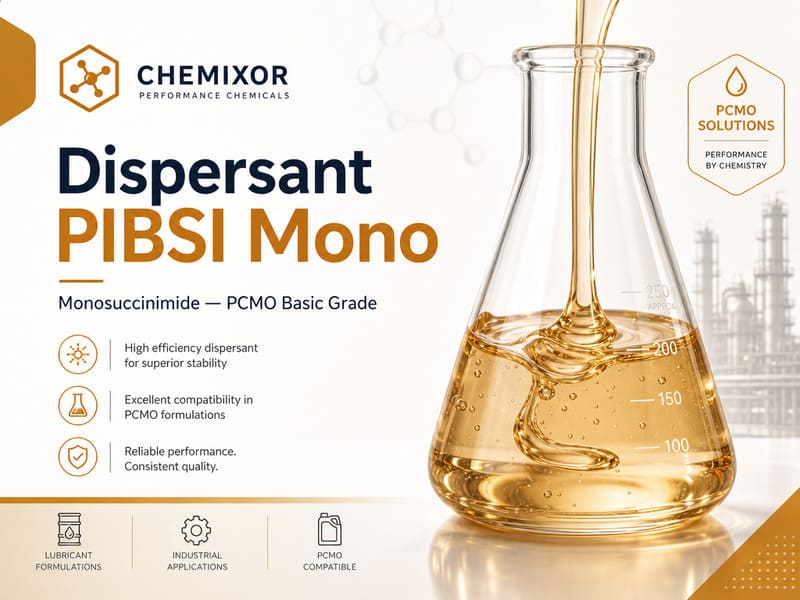
PIBSI Mono-Succinimide

1 succinimide head · Per TDS

Polyisobutylene mono-succinimide. Simplest and lowest-cost variant for passenger car motor oils with moderate sludge control demands.

View details
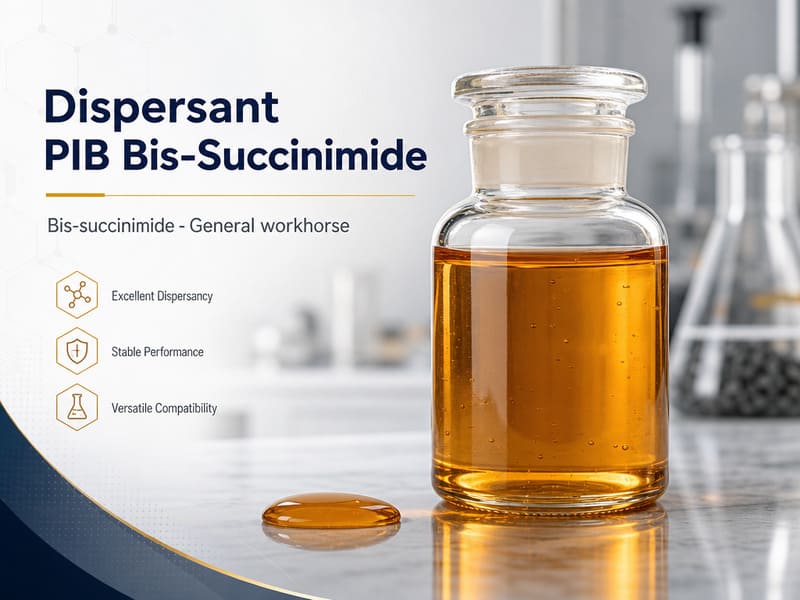
PIB bis-succinimide ashless dispersant additive
Bis

PIB Bis-Succinimide

2 succinimide heads · Per TDS

The all-around workhorse — PCMO, light-duty diesel and gear oils. The most widely specified dispersant grade in modern engine oil formulations.

View details
02

Modified PIBSI — Borated, Boron-Phosphated & Low-Viscosity

Performance-enhanced PIBSI for seal protection (Borated), multifunctional ATF/gear use (Boron-Phosphated), and modern fuel-economy oils (Low-Viscosity).
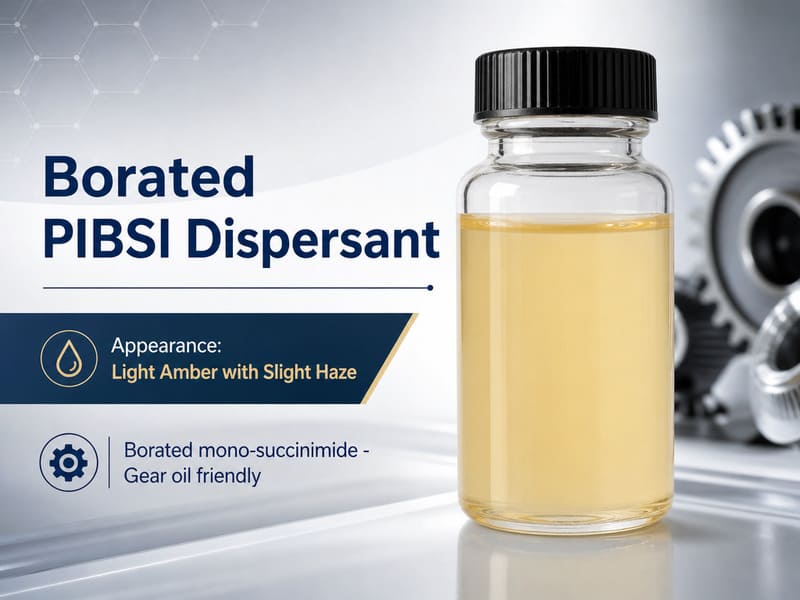
Borated PIBSI ashless dispersant additive with boron treatment
Borated

Borated PIBSI

Mono + B · Per TDS

Boron-treated mono-succinimide for fluoroelastomer seal compatibility and AW synergy. Used in gear oils and ATF.

View details
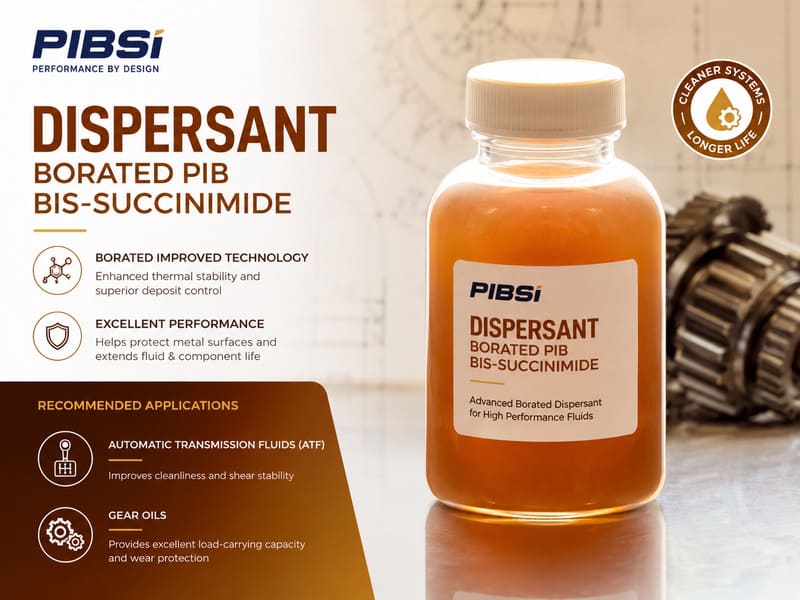
Borated PIB bis-succinimide ashless dispersant
Borated · Bis

Borated PIB Bis-Succinimide

Bis + B · Per TDS

Boron-treated bis-succinimide. The seal-friendly dispersant for ATF, gear oil and modern PCMO with fluoroelastomer compatibility requirements.

View details
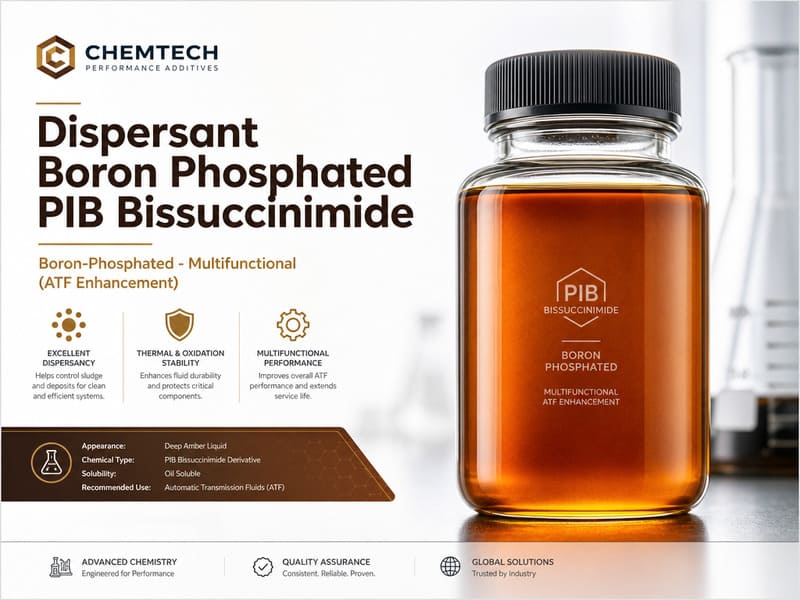
Boron phosphated PIB bissuccinimide multifunctional dispersant
B + P

Boron-Phosphated PIB Bissuccinimide

Bis + B + P · Per TDS

Boron + phosphate dual-modified bissuccinimide. Multifunctional dispersancy + anti-wear + oxidation control — popular in Dexron VI and Mercon LV ATF.

View details
Selection Guide

Seven PIBSI grades at a glance

Quick comparison across all seven Sinolook ashless dispersant products. Click any row to open the full TDS.

Product Structure Typical Treat Rate Primary Application Key Benefit TDS
PIBSI Mono-Succinimide 1 head + PIB tail 2–4% PCMO general sludge control Lowest cost View →
PIB Bis-Succinimide 2 heads + PIB tail 3–6% PCMO + light-duty diesel + gear Workhorse all-rounder View →
Borated PIBSI Mono + B 1–3% Gear oils, ATF Seal compatibility + AW View →
Borated PIB Bis-Succinimide Bis + B 2–5% Modern PCMO, ATF Fluoroelastomer seal protection View →
Boron-Phosphated PIB Bissuccinimide Bis + B + P 2–5% Dexron VI / Mercon LV ATF Multifunctional (disp + AW + AO) View →

Treat rates indicative for typical formulations. Refer to product TDS and your finished oil specification for actual treat rate.

Where PIBSI Ends Up

Three lubricant types, three dispersant strategies

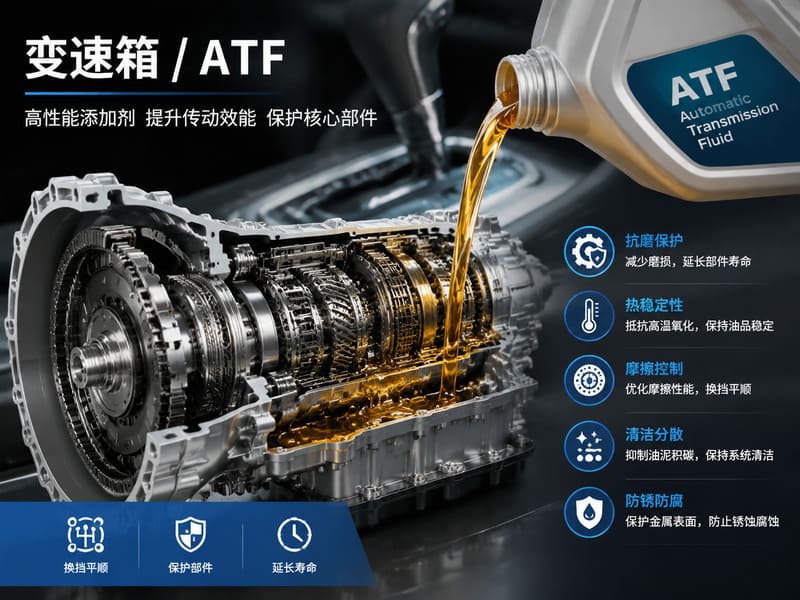
The right PIBSI grade depends on what kind of contaminants the finished lubricant has to handle — sludge for PCMO, soot for HDDO, friction stability for ATF and gear oil.

Why Sinolook Dispersants

Seven PIBSI variants, one supply chain

Few suppliers carry all seven PIBSI structures under one roof. Sinolook does — letting you source the entire dispersant package for any lubricant target from a single PO.

ADVANTAGE 01

Complete dispersant portfolio

Standard PIBSI (Mono / Bis / Poly) plus modified PIBSI (Borated × 2, Boron-Phosphated, Low-Viscosity) — 7 grades from one supplier. No need to qualify multiple suppliers for different dispersant chemistries.

ADVANTAGE 02

Zero sulphated ash contribution

All ashless — perfect for low-SAPS ACEA C-class and API SP / ILSAC GF-6 formulations where every gram of ash counts. Combine with our salicylate detergents for the lowest-SAPS detergent + dispersant pair.

ADVANTAGE 03

Modern fuel-economy ready

Low Viscosity Dispersant designed specifically for 0W-16, 0W-20 and 0W-8 fuel-economy oils — letting you hit dispersancy targets without exceeding SAE J300 viscosity limits.

ADVANTAGE 04

Drum to ISO tank, sample to bulk

Start with a 200L drum for formulation qualification, scale to IBC tote, flexitank or ISO tank for commercial supply across 60+ countries.

Related Additive Categories

Pair dispersant with detergent and ZDDP for a complete additive package

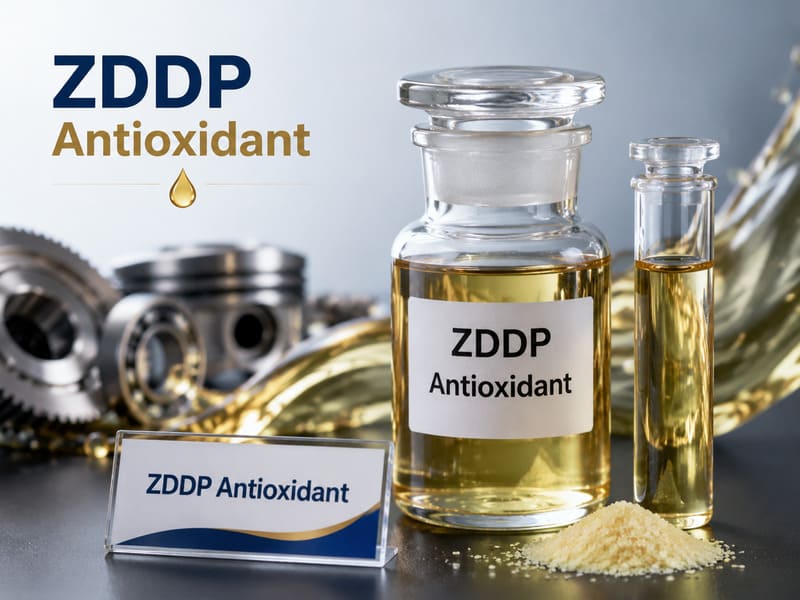
Dispersant alone cannot keep an engine clean — it works hand-in-hand with detergent (for hot-zone deposits) and ZDDP (for wear protection). Sinolook supplies all three families under one supply chain:

FAQ

Frequently asked questions about ashless dispersants

What is an ashless dispersant additive?
An ashless dispersant is a metal-free (no calcium, magnesium or zinc) polymeric lubricant additive that suspends low-temperature contaminants — soot, sludge precursors, oxidation products — in the bulk oil. The most common chemistry is polyisobutylene succinimide (PIBSI), made by reacting a polyisobutylene tail with maleic anhydride and then a polyamine head. The PIB tail solubilizes the molecule in the oil; the succinimide head attaches to polar contaminants and keeps them dispersed away from cold engine surfaces. Ashless dispersants typically make up 3–8% of a finished engine oil and are responsible for sludge control, soot handling and varnish prevention. Because they contain no metal, they contribute zero sulphated ash — critical for modern low-SAPS formulations.
What is the difference between a dispersant and a detergent?
Both keep deposits suspended in the oil, but they work in different temperature zones of the engine:

Detergents are metal-containing overbased compounds (calcium, magnesium or barium sulfonate, phenate or salicylate). They operate in the hot zone — pistons, ring grooves and the upper cylinder — where they neutralize acids and clean high-temperature carbonaceous deposits.
Ashless dispersants are metal-free polymers (PIBSI). They operate in the cold zone — sump, crankcase, oil pan, rocker cover — where they suspend cold sludge, soot and oxidation products in the bulk oil.

Modern engine oils use both: detergents at 2–8% for the hot zone, dispersants at 3–8% for the cold zone. See our sulfonate, phenate and salicylate detergent lines.
What is the difference between mono, bis and poly succinimide?
The number refers to how many succinimide head groups are attached to one polyisobutylene tail:

Mono-succinimide — 1 PIB tail + 1 succinimide head. Simplest and lowest-cost variant, used in PCMO for general sludge control.
Bis-succinimide — 1 PIB tail + 2 succinimide heads. The all-around workhorse for PCMO, light-duty diesel and gear oils.
Poly-succinimide — 1 PIB tail + 3 or more succinimide heads. The highest dispersancy capacity, essential for heavy-duty diesel engine oils that must handle large soot loads from EGR combustion.

More heads = more polar binding sites per molecule = more dispersancy per gram of additive. Choose based on the contaminant load your finished oil needs to handle.
Why use a borated or boron-phosphated PIBSI?
Borated PIBSI is made by reacting standard PIBSI with boric acid, attaching boron atoms to the succinimide head. This delivers three benefits:
1. Improved fluoroelastomer seal compatibility — boron protects the polyamine from attacking the seal, critical for modern engines with Viton-type seals;
2. Additional anti-wear contribution at low ZDDP levels;
3. Synergy with friction modifiers in ATF and gear oil applications.

Boron-Phosphated PIBSI adds a phosphate ester treatment on top of the boron, giving enhanced anti-wear and oxidation control — making it a near-multifunctional additive popular in Dexron VI and Mercon LV ATF, and in limited-slip differential fluids.
What is a low viscosity dispersant and why does it matter?
A low viscosity dispersant uses a shorter polyisobutylene backbone — lower molecular weight (typically PIB Mn around 950 versus 2300 for standard PIBSI), giving the additive significantly lower kinematic viscosity at the same actives level.

This is critical for modern fuel-economy engine oils — 0W-16, 0W-20 and 0W-8 grades cannot tolerate the viscosity contribution of standard PIBSI without exceeding the SAE J300 viscosity ceiling at 100°C. Low viscosity dispersants let formulators include adequate dispersant treat rate (3–6%) without sacrificing fuel-economy viscosity targets. Essential for any 0W-grade PCMO chasing fuel economy / GHG compliance.
How much dispersant do I need in my formulation?
Typical treat rates by application:
Passenger car motor oil (PCMO): 3–5% dispersant — often PIB bis-succinimide alone, or with a borated variant for seal protection
Heavy-duty diesel (HDDO): 5–8% — typically a blend of PIB bis-succinimide + PIB poly-succinimide for high soot loads from EGR
Automatic transmission fluid (ATF): 4–7% — borated or boron-phosphated PIBSI for friction stability and seal compatibility
Gear oils: 2–4% — borated PIBSI for synergy with EP additives
0W-16 / 0W-20 fuel-economy oils: 3–6% — Low Viscosity Dispersant

Always reference the finished oil specification (API CK-4, ACEA C3, Dexron VI, etc.) and your starting formulation rather than treating these as design targets.
Can ashless dispersants be used with detergents and ZDDP?
Yes — modern engine oil formulations require all three families working together. A typical heavy-duty diesel oil uses:
Detergent at 4–6% (sulfonate + phenate combination) for hot-zone acid neutralization;
Ashless PIBSI dispersant at 5–8% (bis + poly succinimide blend) for soot and sludge in the sump;
ZDDP at 1–1.4% for anti-wear and additional oxidation control;
Phenolic + aminic antioxidants at 0.5–1.5% for high-temperature oxidation stability.

The detergent works hot, the dispersant works cold, ZDDP protects sliding contact surfaces, and the antioxidants protect the base oil itself. See sulfonate detergents and ZDDP & antioxidants.
What packaging and MOQ does Sinolook offer for PIBSI?
Standard packaging: 200L drum (sample / qualification), 1000L IBC tote (pilot batches), flexitank (~20 MT), and ISO tank container (~20 MT commercial supply). MOQ typically 1 drum for samples and 1 ISO tank for commercial. PIBSI products are high-viscosity at ambient — IBC tote and ISO tank deliveries include heated-discharge instructions. Global bonded storage across strategic Asia-Pacific hubs enables fast delivery worldwide. HS Code 3811.21 for most PIBSI shipments.
Can Sinolook provide TDS, MSDS, COA and starting formulations?
Yes. Technical Data Sheet (TDS), Material Safety Data Sheet (MSDS / SDS in GHS format), and batch-specific Certificate of Analysis (COA) are provided for every product in English or Chinese. We can also share reference starting formulations for common applications including:
• API SP / ILSAC GF-6 PCMO
• ACEA C2 / C3 / C5 low-SAPS PCMO
• API CK-4 / FA-4 HDDO with EGR
• Dexron VI / Mercon LV ATF
• API GL-4 / GL-5 gear oils
With recommended treat-rate ratios using our companion detergent, ZDDP and antioxidant products. Email sales@sinolook.com or message us on WhatsApp.

Ready to source PIBSI dispersants from Sinolook?

Tell us the dispersant type, target specification (API SP, CK-4, Dexron VI, etc.) and volume — we'll respond within 24 hours with TDS, reference treat rate and a delivered quotation.

Request a Quote

滚动至顶部