Antifoam Agents: Silicone vs Silicone-Free, and the Air-Release Trade-off
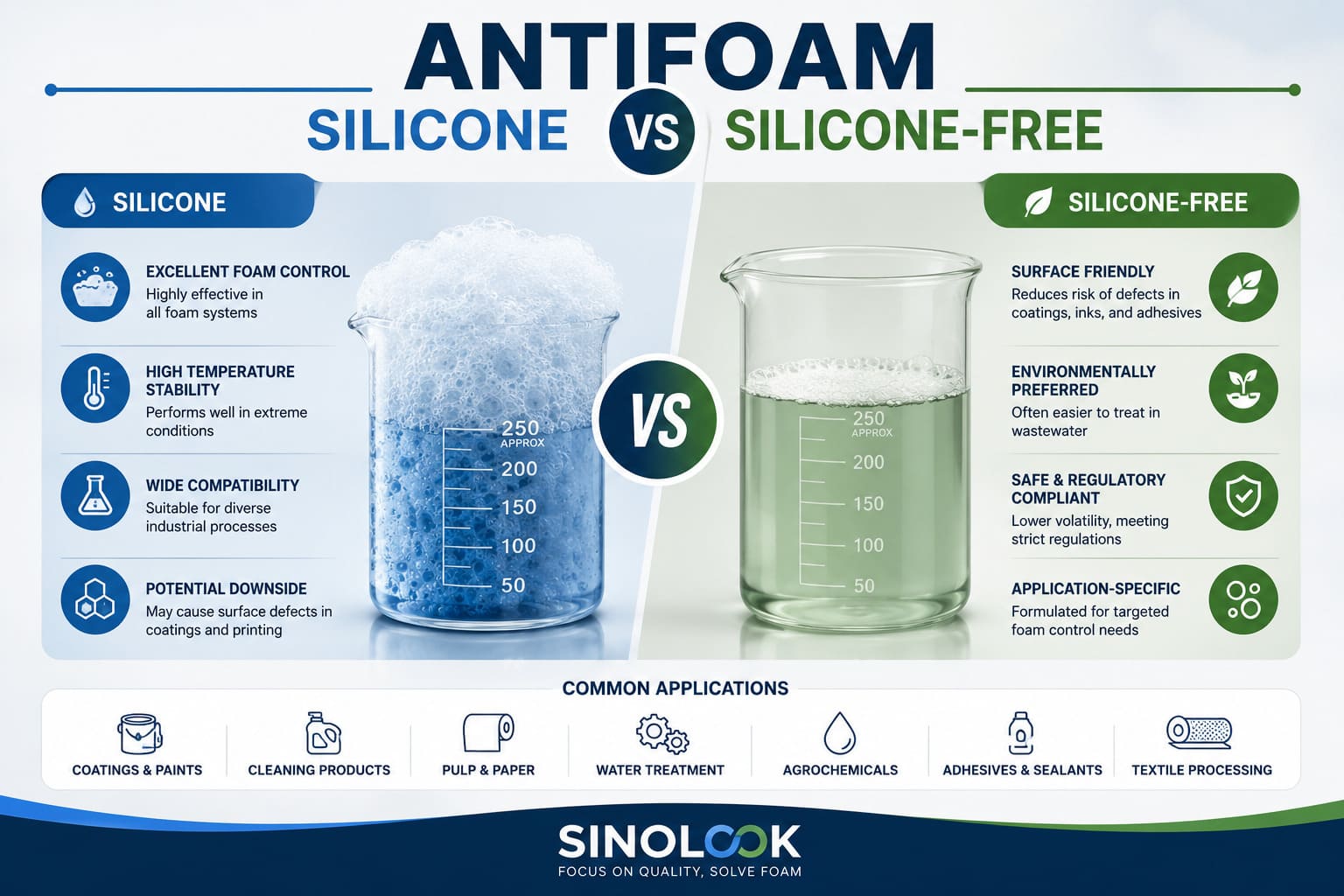
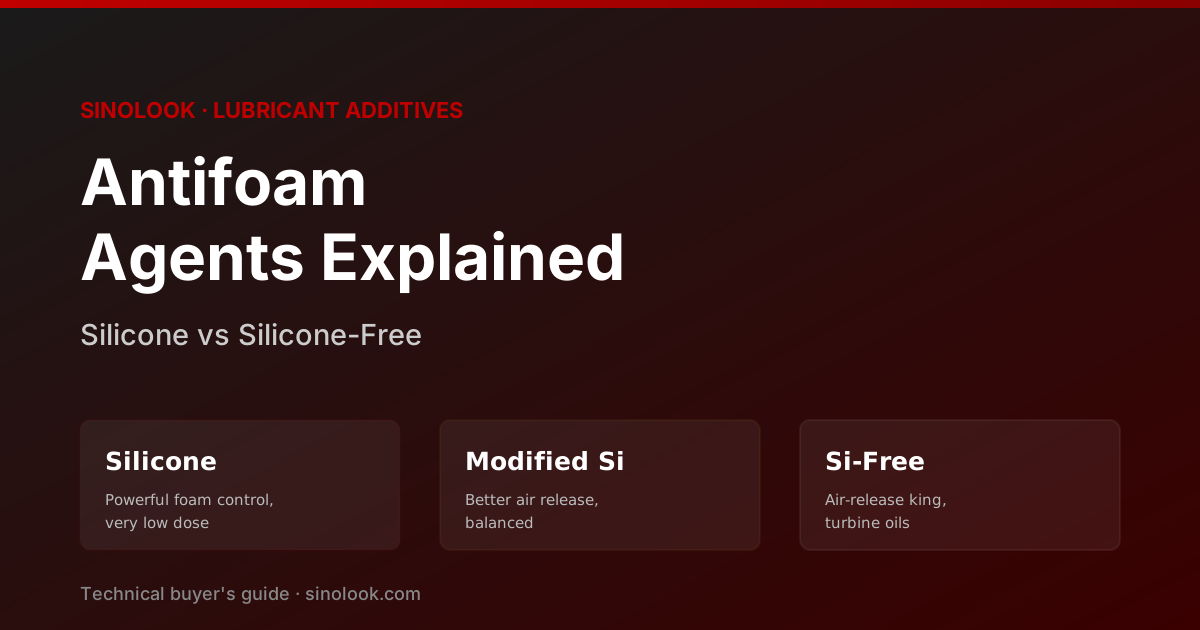
Foam and entrained air are two different problems, and the additive that fixes one can worsen the other. Silicone antifoam crushes surface foam at tiny doses but can trap air; silicone-free types release air beautifully but control foam more gently. Understanding this trade-off is the key to choosing.
Foam vs entrained air
Two distinct problems get confused. Surface foam is the layer of bubbles on top of the oil — it can overflow reservoirs and carry air into pumps. Entrained air is tiny bubbles suspended within the bulk oil — it reduces bearing film strength, causes pump cavitation and accelerates oxidation. An antifoam agent targets surface foam; air release is a related but separate property.
The crucial point: the additives that control surface foam most powerfully — silicones — can, at the wrong dose, slow air release, trapping the more damaging entrained air. This tension between foam control and air release is the heart of antifoam selection. Test methods for both follow ASTM procedures (D892 for foam, D3427 for air release).
Silicone, modified and silicone-free
PDMS silicone
PDMS (polydimethylsiloxane) is the classic, most powerful antifoam, collapsing surface foam at parts-per-million doses. The caveat is air release at higher doses.
Modified silicone
Dimethylsiloxane ester antifoam modifies the silicone to improve air release while keeping strong foam control — a balanced middle ground.
Silicone-free
Silicone-free (organic) antifoam gives excellent air release with gentler foam control — the choice for turbine oils and silicone-sensitive applications. A compound antifoam blends chemistries for a balanced, versatile option.
| Property | PDMS Silicone | Modified Silicone | Silicone-Free |
|---|---|---|---|
| Foam control | Most powerful | Strong | Gentler |
| Air release | Can be slowed | Improved | Excellent |
| Treat rate | Very low (ppm) | Low | Higher |
| Turbine oil fit | Limited | Possible | Preferred |
| Hydraulic oil fit | Good | Very good | Good |
| Best for | Max foam control | Balanced needs | Air-release critical |
Key insight: the question is which problem is more dangerous for your application. If surface foam and overflow are the risk, silicone wins at tiny doses. If entrained air is the enemy — as in turbine oils — silicone-free is preferred even though its foam control is gentler. Many oils land on modified silicone or a compound blend for balance.
The air-release trade-off
Why does powerful silicone antifoam slow air release? The same property that lets silicone destabilize surface foam — its insolubility and very low surface tension — can also stabilize the tiny entrained bubbles inside the oil, slowing their rise and release if the silicone is over-dosed or poorly dispersed. This is why silicone antifoam is dosed at precise, very low levels and added as a diluted concentrate for accurate dispersion.
For oils where entrained air is the primary danger, the trade-off tips toward silicone-free chemistry, accepting gentler foam control in exchange for fast air release.
How to choose (by application)
Turbine oils
Air release is critical — entrained air ruins bearing films and governor response. Silicone-free antifoam is preferred. See industrial & marine additives.
Hydraulic oils
Both foam control and air release matter (entrained air causes pump cavitation). Modified silicone often gives the best balance. See hydraulic oil additives.
Engine oils
Surface foam control is the priority; PDMS or compound antifoam at low dose works well. See engine oil additives.
Selecting an antifoam for your oil?
Sinolook supplies PDMS silicone, modified silicone, silicone-free and compound antifoam agents to over 60 countries. Tell us whether foam control or air release is your priority and our technical team will help you choose.
Request technical support & a quoteFrequently asked questions
What is the difference between foam control and air release?
Surface foam is bubbles on top of the oil, which can overflow and carry air into pumps. Entrained air is tiny bubbles suspended within the bulk oil, which reduce bearing film strength and cause cavitation. Antifoam agents target surface foam; air release is a related but separate property. The challenge is that powerful silicone antifoam can slow air release at the wrong dose.
Why do turbine oils use silicone-free antifoam?
Turbine oils cannot tolerate entrained air, which reduces bearing film strength, causes erratic governor response and accelerates oxidation. Silicone antifoam, while powerful at surface foam, can slow air release. Silicone-free (organic) antifoam controls foam while allowing fast air release, which is why it is the preferred choice for turbine oils despite gentler foam control.
How is silicone antifoam different from silicone-free?
Silicone (PDMS) antifoam is the most powerful surface-foam controller, working at parts-per-million, but can slow air release at higher doses. Silicone-free (organic) antifoam gives gentler foam control but excellent air release. Modified silicone sits between them, improving air release while keeping strong foam control. The choice depends on whether foam or entrained air is the bigger risk.
Why is silicone antifoam dosed at such low levels?
Silicone antifoam is extremely effective, working at parts-per-million — far lower than most additives. Using more than needed does not improve foam control and can harm air release by stabilizing entrained bubbles. Precise low dosing and good dispersion are essential, which is why it is typically added as a diluted concentrate for accurate metering.
Can Sinolook supply both silicone and silicone-free antifoam?
Yes. Sinolook supplies PDMS silicone, modified dimethylsiloxane ester, silicone-free and compound antifoam agents to over 60 countries, with TDS, MSDS and batch COA. Our technical team can help you choose based on whether foam control or air release is your priority. Contact sales@sinolook.com.