Xiamen Sinolook Oil Co., Ltd

Antifoam Additive for Lubricants — Silicone & Silicone-Free Defoamer Supplier | Sinolook

★ Silicone & Silicone-Free — 4 Defoamer Grades
Break the foam, protect the air release — the right defoamer for every system.

PDMS silicone, modified dimethylsiloxane ester, silicone-free and compound antifoams — four defoamer chemistries balancing foam control against air release for engine oils, hydraulic fluids, turbine oils and industrial lubricants.

4
Defoamer Grades
3–300
PPM Typical Treat
Si & Si-Free
Both Chemistries
60+
Countries Served
About Antifoam Agents

Tiny treat rate, critical job — controlling foam without killing air release

Foam is the enemy of lubrication. Air whipped into oil by gears, pumps and crankshafts forms foam that reduces load-carrying, accelerates oxidation, causes pump cavitation and can overflow reservoirs — and the oil's own detergents make the foam worse.

An antifoam additive (defoamer) breaks this foam at parts-per-million dose. It works by dispersing as fine droplets that enter the foam bubble film, lower its local surface tension, and rupture it. Sinolook supplies both silicone chemistries (PDMS and modified dimethylsiloxane ester — most effective at lowest dose) and silicone-free chemistry (polyacrylate — protects air release for turbine and premium hydraulic oils), plus a compound grade for broad applicability. The right choice depends on balancing foam control against air release — a trade-off we help you get right.

PDMS silicone antifoam defoamer additive sample
How an Antifoam Works

Enter the film, lower the tension, rupture the bubble

An antifoam droplet must be insoluble enough to stay as an active droplet, yet dispersed finely enough to reach every bubble. When it enters a foam film, its lower surface tension spreads across the film, thins it, and bursts the bubble.

Antifoam mechanism — three steps to bubble collapse Antifoam droplet (red) enters the bubble film, spreads, and ruptures it ① Stable foam bubble air antifoam stabilized by surfactants ② Droplet spreads in film air low surface tension spreads → film thins ③ Film ruptures ✓ released air escapes, foam collapses

The catch: too much antifoam (especially silicone) over-stabilizes fine internal bubbles and harms air release — see the silicone vs silicone-free trade-off below. Correct dosing (ppm-level) and dispersion are everything.

Silicone vs Silicone-Free

The foam control vs air release trade-off

No antifoam is best at everything. Silicone wins on foam knockdown at the lowest dose; silicone-free wins on air release — critical for turbine and hydraulic systems. Choosing wrong can cause pump cavitation or spongy hydraulics even when surface foam looks fine.

Silicone vs silicone-free antifoam — relative performance Longer bar = stronger performance in that property Silicone (PDMS) Silicone-Free Foam knockdown power ★ Silicone Air release (no entrainment) ★ Si-Free Low treat rate (ppm) ★ Silicone Dispersion stability ★ Si-Free Silicone = max foam control at lowest dose (engine, gear, industrial) Silicone-Free = protects air release (turbine, premium hydraulic) · Compound = balanced

Rule of thumb: if the system has a reservoir where air must escape quickly (turbine, hydraulic), lean silicone-free or carefully dosed compound. If it's a churning sump where surface foam is the main issue (engine, gear), silicone at a few ppm is unbeatable.

Our Antifoam Range

Four defoamer chemistries for every foam control need

From classic PDMS silicone to air-release-friendly silicone-free and balanced compound types — click any product for full TDS and bulk-supply quotation.

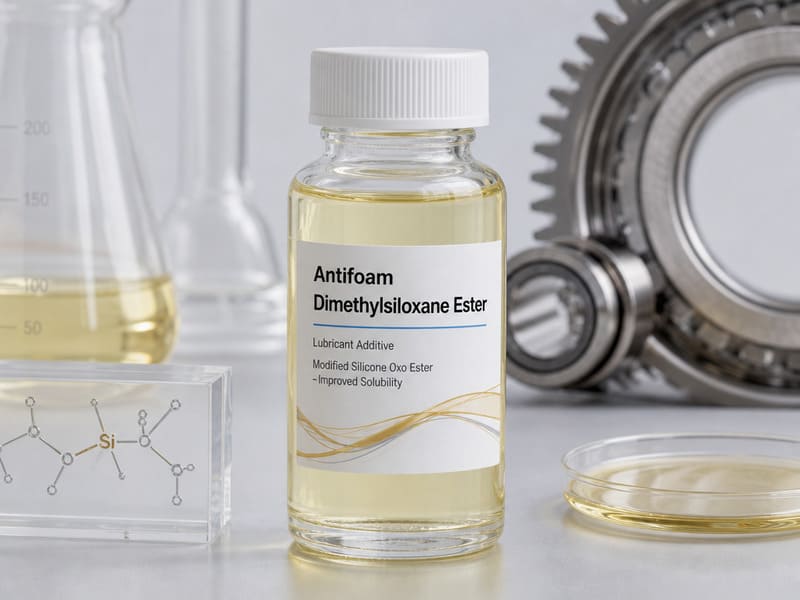
Modified dimethylsiloxane ester antifoam defoamer additive
Modified Si

Dimethylsiloxane Ester Antifoam

Modified siloxane · Per TDS

Ester-modified silicone with improved oil solubility and dispersion stability — better suited to high-viscosity oils and formulations where plain PDMS separates.

View details
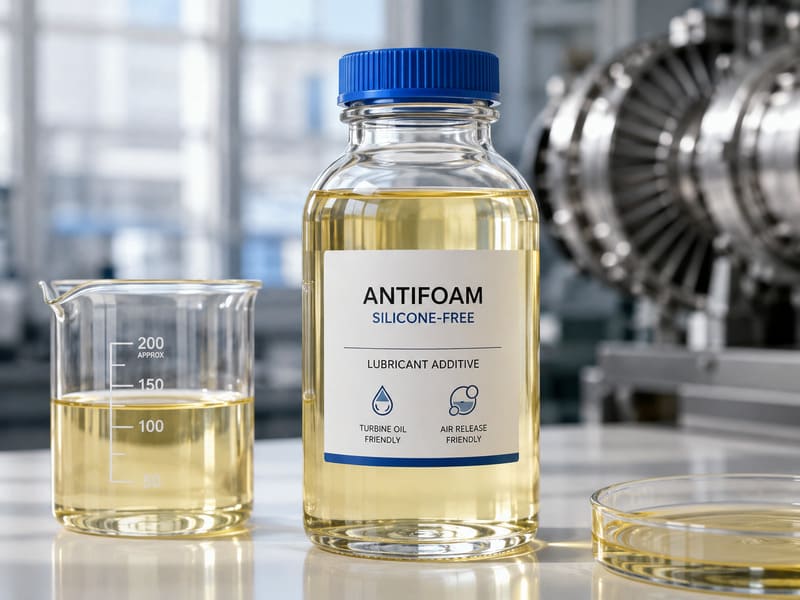
Silicone-free polyacrylate antifoam for turbine oil air release
Silicone-Free

Silicone-Free Antifoam

Polyacrylate type · 50–300 ppm · Per TDS

Controls foam without harming air release. The preferred choice for turbine oils, premium hydraulic fluids and any system where entrained air must escape quickly.

View details
Selection Guide

Four antifoam grades at a glance

Quick comparison across all four Sinolook antifoam products. Click any row to open the full TDS.

Product Type Typical Treat Rate Foam vs Air Release Best Application TDS
Dimethylsiloxane Ester Modified silicone 5–30 ppm Strong foam · better dispersion High-viscosity oils View →
Silicone-Free Polyacrylate 50–300 ppm Good foam · best air release Turbine, premium hydraulic View →

Treat rates indicative. Antifoam response is non-linear — over-dosing can increase foam and harm air release. Always confirm by ASTM D892 (foam) and D3427 (air release) testing in your actual finished oil.

Where Antifoams End Up

Three application zones, three foam control strategies

The right antifoam depends on whether the system prioritizes maximum foam knockdown or fast air release — a churning gear sump and a turbine reservoir need opposite approaches.

Why Sinolook Antifoams

Both silicone and silicone-free — matched to your foam/air-release balance

Antifoam selection is a balancing act, and the wrong choice causes problems that surface foam testing alone won't reveal. Sinolook carries both chemistries and helps you get the balance right.

ADVANTAGE 01

Silicone + silicone-free in one source

PDMS and modified silicone for max foam control, plus polyacrylate silicone-free for air release, plus a compound grade — cover every system from one PO.

ADVANTAGE 02

Foam / air-release balance support

Tell us your application and we'll recommend the right chemistry and starting ppm for your ASTM D892 (foam) and D3427 (air release) testing — avoiding the over-dose trap.

ADVANTAGE 03

Consistent dispersion quality

Antifoam performance depends on droplet size and dispersion stability — verified per batch so you get repeatable foam control without separation in storage.

ADVANTAGE 04

Drum to ISO tank, sample to bulk

Start with a 200L drum for formulation qualification, scale to IBC tote, flexitank or ISO tank for commercial supply across 60+ countries.

Related Additive Categories

Complete your industrial & hydraulic oil package

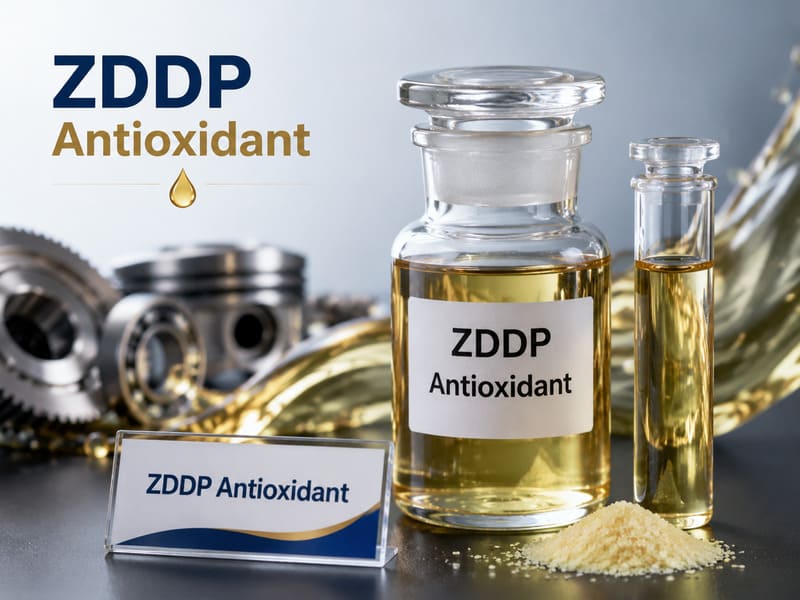
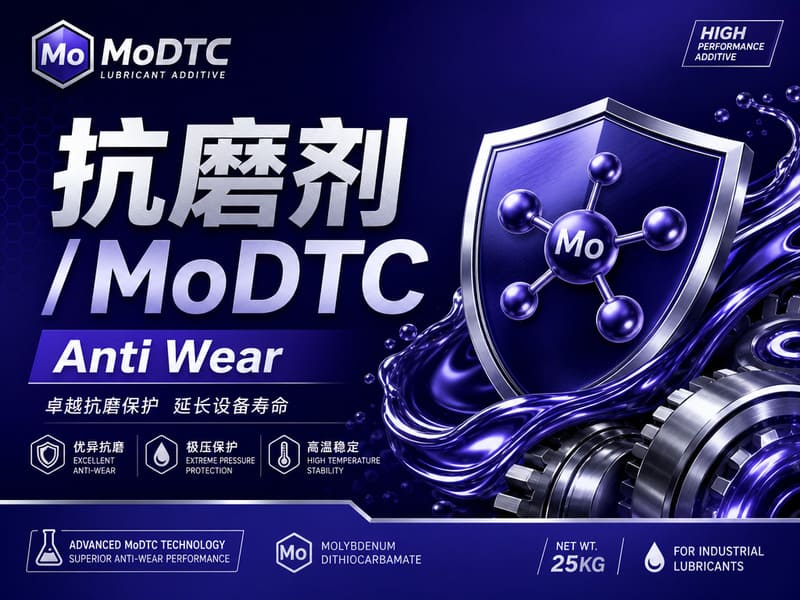
Antifoam is one of the final-touch additives in a finished oil — alongside the ZDDP anti-wear/antioxidant backbone and supplemental anti-wear chemistry. Sinolook supplies the full bench:

FAQ

Frequently asked questions about antifoam agents

What is an antifoam additive in lubricants?
An antifoam additive, also called a defoamer or antifoam agent, is a chemical that controls and breaks down foam in a lubricant. Foam forms when air gets whipped into the oil by churning components such as gears, pumps and crankshafts — and the oil's own additives (detergents, dispersants) actually stabilize this foam, so a dedicated antifoam is needed to break it. The antifoam works by spreading into the foam bubble film, lowering its local surface tension and causing the film to thin and rupture. Antifoams are used at very low treat rates — typically just 3 to 300 parts per million — in engine oils, hydraulic fluids, gear oils, turbine oils and industrial lubricants.
How does an antifoam agent work?
An antifoam works by being insoluble (or only partially soluble) in the oil and dispersed as tiny droplets. When a foam bubble forms, an antifoam droplet enters the thin liquid film of the bubble wall. Because the antifoam has a lower surface tension than the oil, it spreads rapidly across the film, displacing the surface-active species that were stabilizing the bubble. This creates a weak spot where the film thins and ruptures, collapsing the bubble.

The key is balance: the antifoam must be insoluble enough to remain as active droplets, but dispersed finely enough to reach every bubble — which is why correct dosing and good dispersion are critical to performance.
What is the difference between silicone and silicone-free antifoams?
Silicone antifoams (PDMS, polydimethylsiloxane) are extremely effective at very low treat rates and are the most cost-effective foam control for most applications. However, silicone can harm air release — the oil's ability to let dissolved air bubbles rise out — which is critical in turbine and hydraulic systems.

Silicone-free antifoams (typically polyacrylate or polyether based) control foam without harming air release, making them the preferred choice for turbine oils, premium hydraulic fluids and any system where entrained air must escape quickly. The trade-off is that silicone-free types usually need higher treat rates (50–300 ppm vs 3–20 ppm for silicone) and may be less effective on surface foam.
Why is air release important, and how is it different from foam?
Foam is air trapped on the surface of the oil as bubbles; air release (or air entrainment) is about tiny air bubbles dispersed within the bulk oil. They are different problems requiring different solutions.

A strong silicone antifoam excellent at killing surface foam can actually worsen air release by stabilizing the fine internal bubbles, preventing them from coalescing and rising out. In turbine and hydraulic systems, poor air release causes pump cavitation, spongy hydraulic response and accelerated oil oxidation. This is the core reason turbine oils use silicone-free antifoams or very carefully dosed silicone — foam control and air release must be balanced, not maximized independently.
How much antifoam additive do I need?
Antifoams are effective at extremely low treat rates. Typical ranges:
Silicone (PDMS): 3–20 ppm
Modified silicone ester: 5–30 ppm
Silicone-free (polyacrylate): 50–300 ppm
Compound: varies by formulation

Critically, antifoam dosing is non-linear and over-dosing is a common mistake — too much silicone antifoam can actually increase foam and severely harm air release. Because the additive must be properly dispersed as fine droplets, the dosing method and dilution also matter. Always determine the optimum by foam testing (ASTM D892 sequences I, II, III) and air release testing (ASTM D3427) in your actual finished oil.
Why does my oil foam more after I added antifoam?
This is the classic over-dosing reversal. When too much silicone antifoam is added, the excess can no longer disperse as discrete fine droplets — instead it forms larger pools or a separate phase that stops working as a film-rupturing agent and can even stabilize foam. Additionally, poorly dispersed antifoam may settle out in storage, leaving the oil under-protected.

The fix is almost always less antifoam, better dispersion (pre-dilution in a carrier), or switching to a silicone-free or compound type. This counterintuitive behaviour is exactly why ppm-level dosing and ASTM D892 testing matter — more is not better with antifoams.
What packaging and MOQ does Sinolook offer?
Antifoams are often supplied as concentrates or pre-diluted dispersions. Packaging: 25kg / 200L drum (sample / qualification), 1000L IBC tote, and bulk for high-volume users. Because antifoams are dosed at ppm levels, a single drum covers a large volume of finished oil. MOQ typically 1 drum for samples. Global bonded storage across strategic Asia-Pacific hubs enables fast delivery worldwide. HS Code 3811.21 / 3824 depending on type.
Can Sinolook provide TDS, MSDS, COA and foam test support?
Yes. Technical Data Sheet (TDS), Material Safety Data Sheet (MSDS / SDS in GHS format), and batch-specific Certificate of Analysis (COA) are provided for every antifoam in English or Chinese. We can also recommend the right antifoam type (silicone, silicone-free, or compound) for your application's foam control and air release balance, and suggest a starting treat-rate range for your ASTM D892 (foam) and D3427 (air release) testing. Email sales@sinolook.com or message us on WhatsApp.

Ready to source antifoam agents from Sinolook?

Tell us your application (engine, hydraulic, turbine, etc.), foam vs air-release priority and volume — we'll recommend the right chemistry and respond within 24 hours with TDS and a delivered quotation.

Request a Quote
滚动至顶部