Xiamen Sinolook Oil Co., Ltd

Anti Wear Additive Supplier — MoDTC, MoDTP, Borate Ester & TPPT | Sinolook

★ 3 Molybdenum + 2 Ashless EP + 1 DTC Ester = 6 Grades
Molybdenum for fuel economy, ashless EP for extreme pressure — every wear regime covered.

MoDTC, MoDTP, molybdenum amine, TEGMEB borate ester, TPPT phosphorothionate and ashless dialkyldithiocarbamate ester — six anti-wear and extreme-pressure additives engineered for API SP, ILSAC GF-6 fuel-economy oils, DIN 51524 hydraulic, API GL-5 gear and ISO VG industrial gear formulations.

6
AW + EP Grades
30–50%
MoDTC Friction Reduction
Mo · B · P
3 AW Chemistries
60+
Countries Served
About Anti-Wear Additives

Beyond ZDDP — the modern anti-wear toolkit for fuel economy and extreme pressure

ZDDP has been the wear-protection backbone of lubricants for 70+ years, but modern engine oils need more — friction reduction for fuel economy, extreme-pressure capability for hypoid gears, and ashless options for low-SAPS formulations.

Sinolook supplies the complete anti-wear toolkit beyond ZDDP: molybdenum compounds (MoDTC, MoDTP, Mo amine) that form low-friction MoS₂ sheets for fuel-economy oils; ashless EP additives (TPPT phosphorothionate, TEGMEB borate ester) that handle hypoid gear and industrial extreme-pressure loads; and ashless dialkyldithiocarbamate ester for multifunctional AW + AO performance in low-SAPS formulations. Six grades let you build the exact anti-wear performance your finished lubricant needs.

MoDTC molybdenum dialkyldithiocarbamate anti-wear friction modifier additive
The MoDTC Fuel-Economy Mechanism

How MoDTC forms MoS₂ sheets — and cuts friction 30–50%

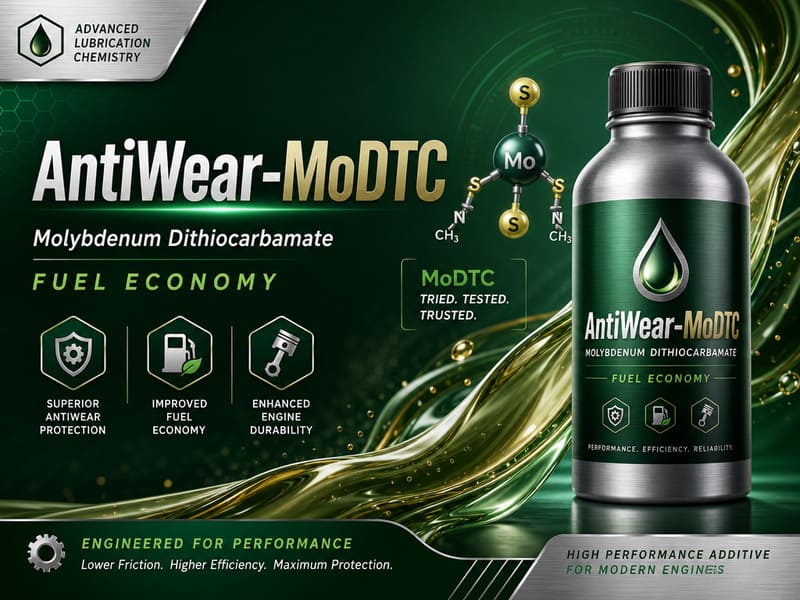
MoDTC is the gold standard friction modifier in modern fuel-economy engine oils. Under sliding contact, it decomposes to form sheets of molybdenum disulphide (MoS₂) — a layered crystal that slides easily over itself, much like graphite, delivering the lowest friction coefficient of any common lubricant additive.

MoDTC tribofilm formation on metal surfaces Sliding contact → heat → MoDTC decomposes → MoS₂ layered crystal → low-friction interface WITHOUT MoDTC METAL (upper surface) asperity contact METAL (lower surface) Friction Coefficient μ ≈ 0.10–0.15 High wear · low fuel economy + MoDTC heat & pressure WITH MoDTC — MoS₂ TRIBOFILM METAL (upper surface) ↔ MoS₂ layers slide easily ↔ METAL (lower surface) Friction Coefficient μ ≈ 0.04 ▼ 60% Low wear · 1–3% fuel economy gain WHY MoS₂ IS THE GOLD STANDARD Layered S–Mo–S crystal structure with weak inter-layer bonds — same low-friction principle as graphite

A 30–50% reduction in friction coefficient translates directly to 1–3% improved fuel economy in modern engines — the reason MoDTC is standard in API SP, ILSAC GF-6, and ACEA C-class fuel-economy engine oils. Combined with our ZDDP, the mixed Mo–Zn–P tribofilm delivers low friction plus long wear life.

Anti-Wear vs Extreme Pressure

Which additive for which load — the AW/EP positioning map

Different anti-wear chemistries excel at different combinations of contact pressure and operating temperature. The map below shows where each Sinolook AW/EP grade lives — from low-friction MoDTC in mild PCMO conditions to TPPT in extreme hypoid gear loads.

AW / EP additive positioning map X-axis: contact load & pressure · Y-axis: operating temperature · zones show where each chemistry excels Operating Temperature → Contact Load / Pressure → low mid high light (PCMO) medium (HDDO, hydraulic) heavy (hypoid gear) AW · FUEL ECONOMY AW · MIXED-LOAD EP · EXTREME PRESSURE ★ MoDTC FE leader Mo Amine MoDTP AW + AO ★ Ashless DTC Ester TEGMEB Borate TPPT EP/hypoid

Green zone = Mo chemistries (friction reduction); Brown/amber zone = ashless chemistries (mixed-load and extreme-pressure). Most lubricant formulations combine 2–3 chemistries — for example, modern PCMO uses MoDTC (FE) + ZDDP (general AW), while gear oils use TPPT (EP) + borate ester (load-carrying) + ashless DTC.

Our Anti-Wear & EP Range

Six grades across three chemistries — every load and SAPS budget covered

Molybdenum compounds for fuel-economy AW (MoDTP / MoDTC / Mo amine), ashless EP for extreme-pressure (TEGMEB borate ester / TPPT phosphorothionate), and multifunctional ashless DTC ester for low-SAPS AW + AO. Click any product for full TDS and bulk-supply quotation.

01

Molybdenum-Based AW — MoDTC, MoDTP & Mo Amine

Form MoS₂ tribofilms on stressed metal surfaces. Best in PCMO and HDDO for friction reduction, fuel economy and supplemental AW. The "Mo additive" of modern engine oils.

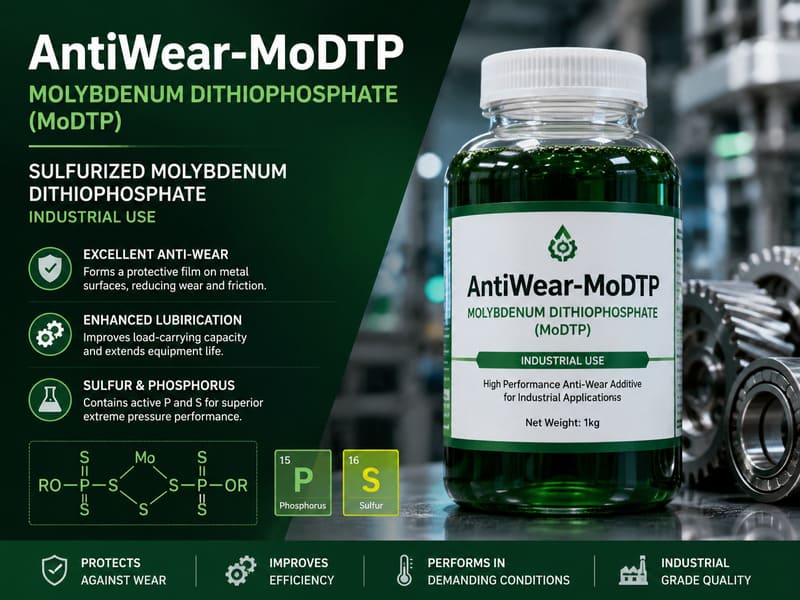
MoDTP molybdenum dialkyldithiophosphate anti-wear antioxidant additive
MoDTP

Molybdenum Dialkyldithiophosphate (MoDTP)

Mo + P + S · Per TDS

Dual-function AW + AO. Decomposes to mixed MoS₂ + phosphate tribofilm. Used in PCMO and HDDO at moderate Mo levels for both wear and oxidation control.

View details
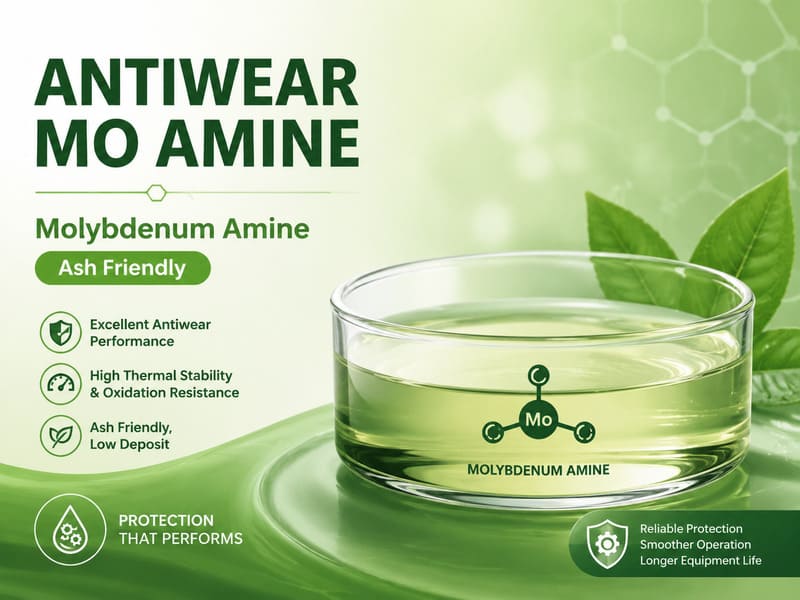
Molybdenum amine complex sulfur-free friction modifier additive
Mo Amine

Molybdenum Amine Complex

Mo (sulphur-free) · Per TDS

Sulphur-free Mo source for low-SAPS engine oils where total sulphur is constrained. Friction reduction without contributing to S budget.

View details
02

Ashless EP — Borate Ester & Phosphorothionate

Metal-free extreme-pressure additives. For hypoid gear oils, industrial gear oils, metal-working fluids and any application requiring high load-carrying with zero metal contribution.

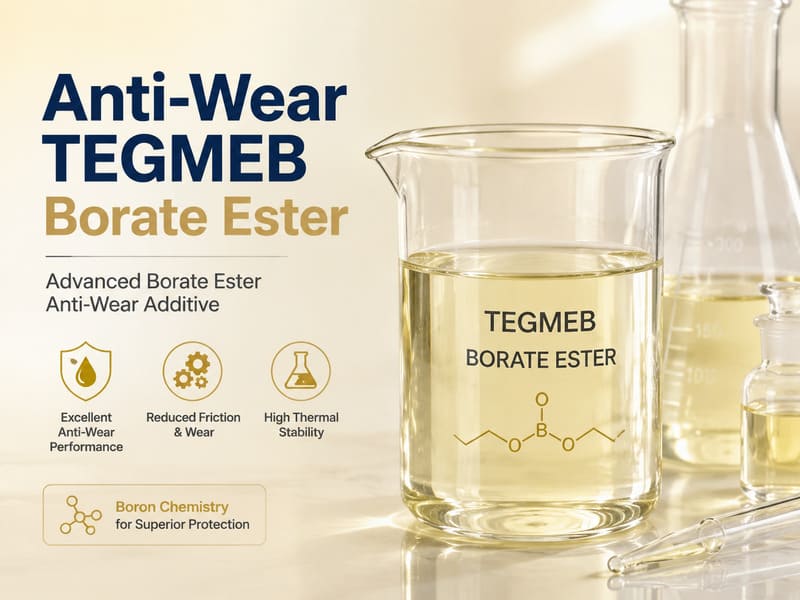
TEGMEB triethylene glycol monoethyl ether borate ester ashless EP additive
Borate · Ashless

TEGMEB Borate Ester

Triethylene glycol borate · Per TDS

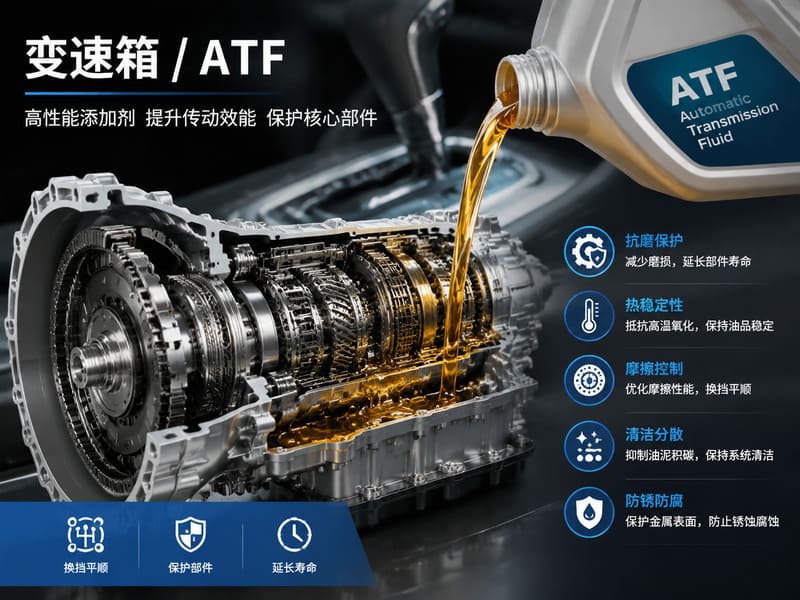
Ashless boron-based EP additive. Excellent load-carrying for industrial gear, metal-working fluids and as friction modifier in ATF. Synergistic with ZDDP and Mo compounds.

View details
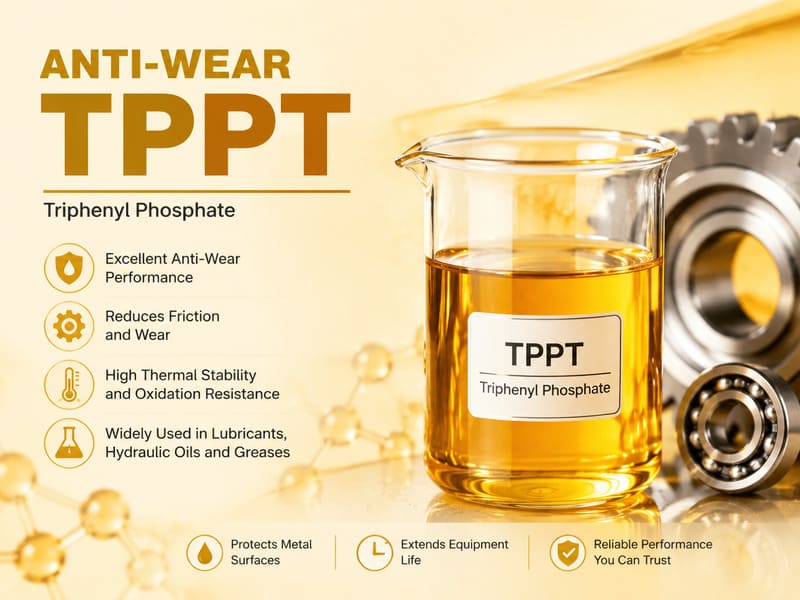
TPPT triphenyl phosphorothionate ashless EP additive hypoid gear
TPPT · Ashless EP

Triphenyl Phosphorothionate (TPPT)

P + S aromatic · Per TDS

High-performance ashless EP. The standard sulphur-phosphorus EP additive in hypoid gear oils (API GL-5), heavy-duty industrial gear oils and turbine oils requiring AW boost.

View details
03

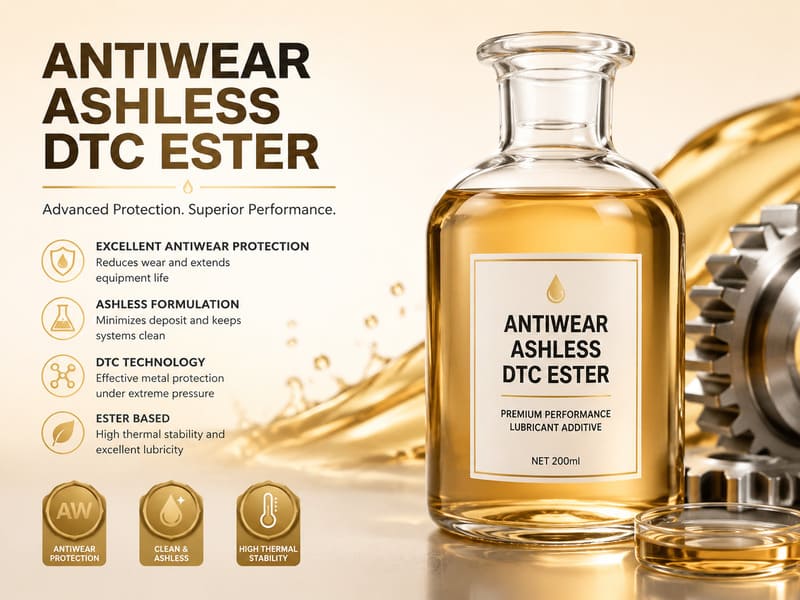
Ashless Dithiocarbamate — Multifunctional AW + AO

Multifunctional ashless additive — combines anti-wear, antioxidant and copper-passivation properties in one molecule. The "ashless ZDDP alternative" for low-SAPS formulations.

Selection Guide

Six AW/EP grades at a glance

Quick comparison across all six Sinolook anti-wear and extreme-pressure products. Click any row to open the full TDS.

Product Chemistry Typical Treat Rate Primary Application Key Benefit TDS
Group 01 — Molybdenum-Based (AW + friction modification)
MoDTP Mo + P + S 100–500 ppm Mo PCMO, HDDO, industrial Dual AW + AO View →
Molybdenum Amine Complex Mo (S-free) 200–600 ppm Mo Ultra-low-SAPS PCMO No S contribution View →
Group 02 — Ashless EP (metal-free extreme pressure)
TEGMEB Borate Ester Ashless · B 0.5–2.0% Industrial gear, MWF, ATF FE + EP + seal-friendly View →
TPPT Ashless · P + S aromatic 0.3–1.5% API GL-5 hypoid, gear, turbine Premium EP load-carrying View →
Group 03 — Multifunctional Ashless

Treat rates indicative for typical formulations. Refer to product TDS and your finished oil specification (API SP, CK-4, DIN 51524, API GL-5, ISO VG, etc.) for actual dosing.

Where AW & EP Additives End Up

Three application zones, three anti-wear strategies

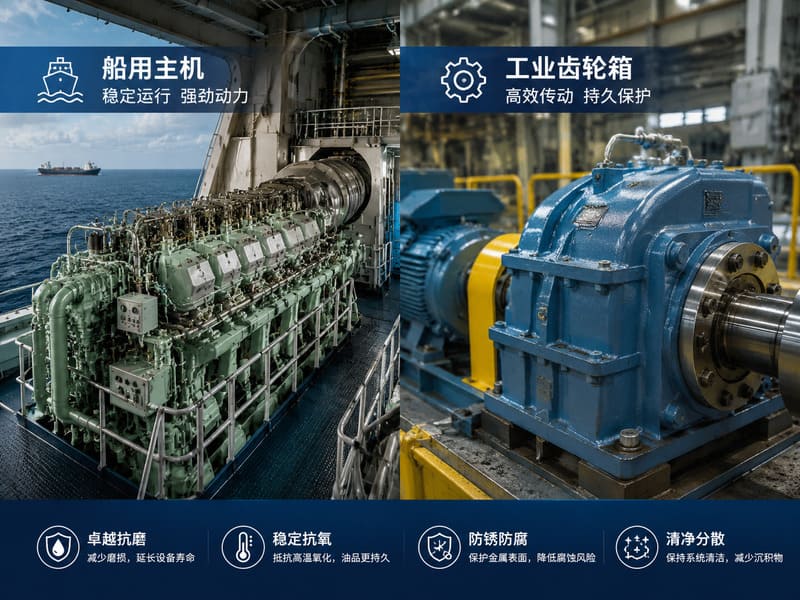
The right AW/EP combination depends on contact load, operating temperature and SAPS budget. Three classic battlefields:

Why Sinolook AW + EP Additives

Six grades across Mo, B, P and ashless DTC — one supply chain

Few additive suppliers carry both molybdenum compounds and ashless EP additives in-house. Sinolook does — letting you build the exact AW/EP package your formulation needs from a single PO, with tight Mo content verification on every batch.

ADVANTAGE 01

Complete Mo + ashless toolkit

3 Mo grades + 2 ashless EP + 1 multifunctional ashless DTC — covers every wear regime from fuel-economy PCMO to hypoid gear oils. Build any AW/EP synergy in one PO.

ADVANTAGE 02

Tight Mo, B, P content control

ICP metal-content verification on every Mo batch — critical for hitting API SP / ILSAC GF-6 P limits and ACEA C-class ash caps. Boron content tightly controlled for borate ester batches.

ADVANTAGE 03

Synergy formulations available

Reference starting formulations for fuel-economy PCMO (MoDTC + ZDDP ratio), hypoid gear (TPPT + sulphurized olefin), industrial gear (TPPT + TEGMEB) and low-SAPS turbine oil — available on request.

ADVANTAGE 04

Drum to ISO tank, sample to bulk

Start with a 200L drum for formulation qualification, scale to IBC tote, flexitank or ISO tank for commercial supply across 60+ countries.

Related Additive Categories

Pair AW/EP with ZDDP and dispersants for a complete additive package

Mo and ashless EP additives reach their full potential only when combined with ZDDP (general AW backbone) and ashless dispersants (sludge and soot control). Sinolook supplies the full bench:

FAQ

Frequently asked questions about anti-wear additives

What is an anti-wear additive in lubricants?
An anti-wear (AW) additive is a chemical that decomposes under sliding-contact heat and pressure to form a protective tribofilm on metal surfaces — separating the two surfaces and dramatically reducing wear. The most famous AW additive is ZDDP, which forms a zinc phosphate glass. Modern lubricants supplement ZDDP with:
Molybdenum compounds (MoDTC, MoDTP, Mo amine) — form low-friction MoS₂ layers for fuel-economy oils;
Ashless EP additives (TPPT, TEGMEB borate ester) — for high-load extreme-pressure protection;
Ashless dithiocarbamate esters — multifunctional AW + AO without metal.

AW additives are essential in engine oils, hydraulic fluids, gear oils, ATF and metal-working fluids.
What is the difference between MoDTC and MoDTP?
Both are molybdenum-based anti-wear and friction-modifier additives, but they form different tribofilms:

MoDTC (Molybdenum Dialkyldithiocarbamate) decomposes to form pure MoS₂ — a layered structure that gives the lowest friction coefficient (μ ≈ 0.04) of any common additive. The gold-standard friction modifier for fuel-economy engine oils such as 0W-16 and 0W-20.
MoDTP (Molybdenum Dialkyldithiophosphate) decomposes to a mixed MoS₂ + phosphate film. Delivers both anti-wear and antioxidant benefits, but with somewhat higher friction than MoDTC.

Modern PCMO formulations often use MoDTC at 200–700 ppm Mo for friction reduction plus MoDTP at low levels for additional AW + AO support.
How does MoDTC reduce friction and improve fuel economy?
Under boundary lubrication conditions (low oil film thickness, high contact pressure), MoDTC decomposes on the metal surface to form sheets of molybdenum disulphide (MoS₂). MoS₂ has a layered crystal structure where the sulphur–molybdenum–sulphur layers slide easily over each other along the basal plane — similar to graphite.

The result is a friction coefficient of μ ≈ 0.04 or lower, compared to μ ≈ 0.10–0.15 for ZDDP alone. This 30–50% friction reduction translates directly to 1–3% improved fuel economy in modern engines — the reason MoDTC is now standard in API SP, ILSAC GF-6 and ACEA C-class fuel-economy engine oils.
What is the difference between anti-wear (AW) and extreme-pressure (EP) additives?
AW additives operate in the boundary lubrication regime — moderate temperature and pressure where the oil film is thin but still present. Typical of engines, hydraulics and most gear teeth. AW films are typically 50–200 nm thick.

EP additives operate in the extreme-pressure regime — very high contact pressure where metal-to-metal contact occurs. Typical of hypoid gears (axle differentials), heavy-duty industrial gears and metal-working operations. EP additives release sulphur or phosphorus at the contact point to form thicker reactive films (200–1000 nm) that prevent welding and scoring.

Sinolook supplies both: MoDTC and MoDTP for AW / friction modification, plus TPPT, TEGMEB borate ester and ashless dithiocarbamate ester for EP / heavy-load applications.
Why do modern engine oils use both ZDDP and molybdenum AW additives?
ZDDP and molybdenum additives work synergistically — they form a mixed tribofilm that is more durable and lower-friction than either additive alone:
• ZDDP forms a zinc phosphate glass that protects against severe wear;
• MoDTC forms MoS₂ sheets that slide easily for low friction;
• Mixed films incorporate both, delivering long wear protection plus reduced friction.

Additionally, API SP and ILSAC GF-6 cap ZDDP loading via phosphorus limit (max 0.08% P), so molybdenum becomes essential to maintain wear protection while staying within the P budget. Typical PCMO uses 0.8–1.0% ZDDP plus 200–700 ppm Mo as MoDTC. See ZDDP & antioxidants.
What is an ashless EP additive and why use one?
Ashless EP additives contain no metal — only carbon, hydrogen, sulphur, nitrogen, oxygen and sometimes phosphorus. Examples include TPPT (triphenyl phosphorothionate), TEGMEB borate ester, and ashless dialkyldithiocarbamate ester.

They are essential for:
1. Low-SAPS engine oils where every gram of metal counts;
2. Clear hydraulic fluids where transparency matters;
3. Food-grade and biodegradable lubricants where metal is forbidden;
4. Supplementing ZDDP in heavy-duty gear and HDDO formulations where ZDDP alone cannot handle the EP load.

They contribute zero sulphated ash and zero metal content.
How much anti-wear additive do I need in my formulation?
Typical treat rates:
PCMO: 200–700 ppm Mo from MoDTC + 0.8–1.0% ZDDP
HDDO: 100–400 ppm Mo from MoDTC or MoDTP + 1.2–1.4% ZDDP
Hydraulic oils: 0.5–1.0% ZDDP + optional 0.1–0.3% ashless EP (TPPT, borate ester)
Industrial gear oils: 0.5–1.5% ZDDP + 0.5–2.0% TPPT or S–P EP package
API GL-5 hypoid gear: 1.0–3.0% TPPT + sulphurized olefin EP package
Metal-working fluids: 1–5% borate ester or ashless DTC ester

Always reference the finished oil specification and your starting formulation.
Can Mo additives, ZDDP, and ashless EP be used together?
Yes — and they often are, by design. Modern lubricants use combinations for synergistic performance:
Fuel-economy PCMO: MoDTC (FE) + Secondary-Primary Blend ZDDP (AW) + Phenolic Ester AO + ADPA
HDDO with EGR: MoDTP (AW + AO) + Hybrid ZDDP + PIB Poly-Succinimide dispersant
API GL-5 hypoid gear: TPPT (EP) + Sulphurized olefin (EP) + Primary ZDDP (AW)
Low-SAPS turbine: Ashless DTC Ester (AW + AO) + DBPC + ADPA

The molecules work in different temperature/pressure regimes — Mo for low-friction, ZDDP for general AW, ashless EP for extreme load.
What packaging and MOQ does Sinolook offer?
Standard packaging: 200L drum (sample / qualification), 1000L IBC tote (pilot batches), flexitank (~20 MT), and ISO tank container (~20 MT commercial). MOQ typically 1 drum for samples and 1 ISO tank for commercial. Global bonded storage across strategic Asia-Pacific hubs enables fast delivery worldwide. HS Code 3811.21 for most AW/EP additive shipments.
Can Sinolook provide TDS, MSDS, COA and starting formulations?
Yes. Technical Data Sheet (TDS), Material Safety Data Sheet (MSDS / SDS in GHS format), and batch-specific Certificate of Analysis (COA) are provided for every product in English or Chinese. We can also share reference starting formulations for:
• API SP / SQ / ILSAC GF-6 fuel-economy PCMO
• ACEA C-class low-SAPS PCMO
• API CK-4 / FA-4 HDDO
• API GL-5 hypoid gear oils
• ISO VG industrial gear oils (FZG > 12)
• DIN 51524 part 2 / 3 hydraulic
• Low-SAPS turbine oils
With recommended Mo:Zn:P ratios. Email sales@sinolook.com or message us on WhatsApp.

Ready to source anti-wear and EP additives from Sinolook?

Tell us the additive type (MoDTC, MoDTP, TPPT, borate ester, etc.), target specification and volume — we'll respond within 24 hours with TDS, reference treat rate and a delivered quotation.

Request a Quote
滚动至顶部